WinSpirit payment methods for fiat and crypto
 Available in US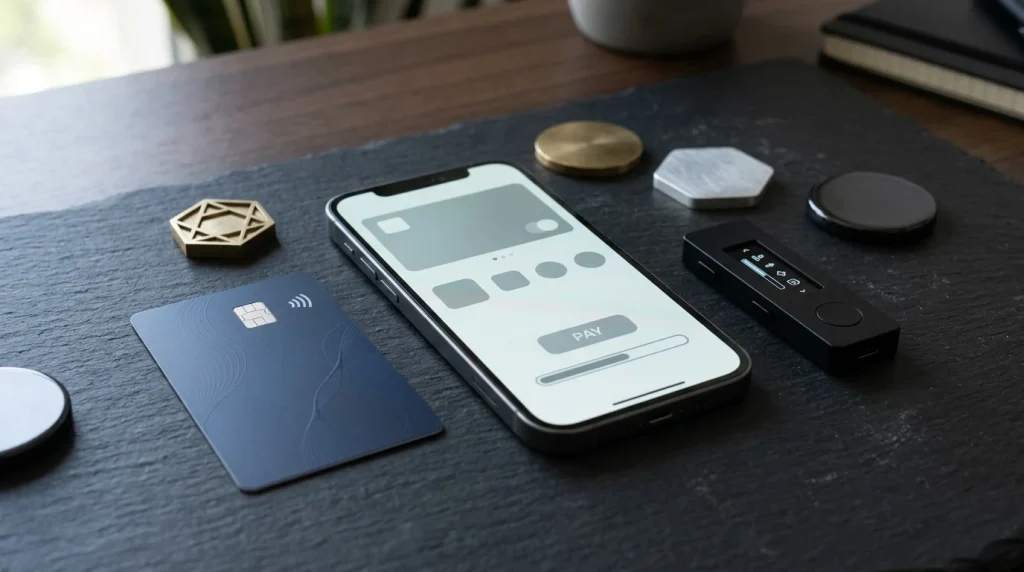
WinSpirit runs a hybrid payment setup. Its listed fiat rails include Visa, Mastercard, bank transfer, MiFinity and eZeeWallet, while the crypto side includes Solana, Bitcoin, Ethereum, Bitcoin Cash, XRP, DAI, Litecoin, Tether, USD Coin, Dogecoin and TRX. AUD also appears among the supported fiat currencies. The useful way to read that mix is method by method: fiat payments depend on card, bank or wallet rules, while crypto transfers add network selection, blockchain fees, price movement and transaction irreversibility to the payment decision.
Table of Contents
- A payment check starts with the rail, currency and transfer path
- Cards, bank transfer and e-wallets make up the fiat side
- AUD support simplifies denomination, not every conversion decision
- Withdrawal-cap snapshots need to be read as separate figures
- Crypto adds price movement, network fees and irreversible transfers
- WinSpirit lists eleven crypto payment options
- Payment questions about WinSpirit
- WinSpirit payments combine broad rail choice with transfer-specific decisions
A payment check starts with the rail, currency and transfer path
Two deposits with the same headline value can behave differently because the path is different. A card payment may involve the card issuer, a payment processor and currency conversion. A crypto payment moves through a blockchain network and depends on the exact asset, address format and network selected for the transfer. Treating every method as interchangeable hides the main sources of cost and error.
For WinSpirit, the practical starting point is to separate what belongs to the casino from what belongs to the payment rail. The listed method tells you which route can appear in the payment environment. A bank, card issuer, e-wallet or blockchain can then add its own timing, conversion or network conditions. Those are external mechanics rather than a single casino-wide fee rule.
- Identify whether the transaction uses fiat or crypto.
- For fiat, compare the account currency with the funding currency and check the payment provider’s conversion terms.
- For crypto, match the asset and the network shown in the payment dialog before any transfer is created.
- Keep transaction identifiers, payment confirmations and account correspondence when a transfer needs to be traced.
Account verification can also affect how a payment issue is resolved because identity and address documents are part of WinSpirit’s account controls. The account verification guide explains the document and support flow separately from the payment mechanics.
Cards, bank transfer and e-wallets make up the fiat side
WinSpirit lists Visa, Mastercard, bank transfer, MiFinity and eZeeWallet among its fiat payment options, together with additional region-dependent rails. That mix covers three familiar payment families: card processing, bank-based transfers and stored-value or e-wallet services.
- Visa and Mastercard — card rails where the issuer can apply its own transaction and currency-conversion rules.
- Bank transfer — a bank-to-account route that can involve bank processing windows and reference details.
- MiFinity and eZeeWallet — wallet-style rails that separate the casino transaction from the user’s underlying card or bank funding source.
- Additional regional rails — the exact set can depend on the payment environment shown for the account.
The benefit of separating these families is practical. Card, bank and wallet transactions can each have different reversal rules, settlement paths and support contacts. If a payment is delayed, the right evidence also differs: card authorisation details, bank transfer references and wallet transaction IDs are not interchangeable.
WinSpirit’s mobile PWA and browser access use the same account environment, so changing device format does not turn a card, bank or wallet rail into a different payment product. The payment method remains the important layer.
AUD support simplifies denomination, not every conversion decision
AUD is listed among WinSpirit’s supported fiat currencies. That can reduce one layer of mental conversion when an account balance or transaction is denominated in Australian dollars. It does not automatically remove every conversion step around the payment, because the funding source or payment provider may still operate in another currency or apply its own exchange treatment.
Currency support and payment-method support are therefore related but separate. The account currency describes how values are displayed and settled inside the account environment. The rail describes how money reaches or leaves that environment. A reader comparing two methods should look at both layers rather than assuming that an AUD-labelled balance makes every funding route an AUD-native transaction.
This distinction is especially useful when comparing fiat with crypto. A crypto transfer can start with an AUD purchase of a token, move through a blockchain, then later be converted again. The account may show an AUD value while the underlying transfer still carries crypto price and network exposure.
Withdrawal-cap snapshots need to be read as separate figures
Published WinSpirit profile snapshots show different withdrawal-cap structures. One Casino Guru profile snapshot has displayed USD 25,000 per month. Another cached snapshot has shown USD 14,000 per week together with USD 60,000 per month. Those figures should stay separate because combining them into one cap would create a number that neither snapshot states.
The practical consequence is that a withdrawal cap is not just a headline ceiling. The period matters as much as the amount. A weekly cap and a monthly cap can operate together, while a separate monthly-only figure describes a different structure. Currency matters too: the published snapshots are in USD, so they should not be treated as an AUD-denominated limit.
When a withdrawal is being planned, the most useful check is the limit actually shown for the account and method at that time. That avoids turning an older profile snapshot into a promise about a current transaction. Transaction records are also worth keeping because a cap issue can otherwise look similar to a processing delay.
Crypto adds price movement, network fees and irreversible transfers
Crypto changes the payment calculation because the value of the asset can move between acquisition, deposit and withdrawal. Bitcoin, Ethereum, Dogecoin and other non-stable assets can rise or fall sharply in fiat terms. Stablecoins such as Tether, USD Coin and DAI are designed around more stable reference values, but their transfers still depend on blockchain infrastructure and address accuracy.
Network fees are another layer. They are paid for blockchain processing and can change with network conditions. That makes them different from a casino fee: a blockchain charge may exist even when the casino itself has no separate fee for the transaction. The exact network shown in the payment dialog matters because the same token name can exist on more than one chain in the wider crypto ecosystem.
Blockchain transfers are also generally irreversible. A mistyped address or a transfer sent on the wrong network can be difficult or impossible to recover. That is why asset and network matching matters more than the visual similarity of ticker symbols. The first characters of an address, a saved contact or a previously used network should never be treated as enough on their own.
With crypto, the payment amount is only one part of the transaction. Network choice and price movement can change the economic result even when the nominal token amount is unchanged.
For readers who want to compare the casino product beyond payments, the games and live casino guide separates provider breadth and game categories from account-funding mechanics.
WinSpirit lists eleven crypto payment options
WinSpirit’s listed crypto payment options are Solana, Bitcoin, Ethereum, Bitcoin Cash, XRP, DAI, Litecoin, Tether, USD Coin, Dogecoin and TRX. The brand-level list is broad, but the safe way to present transfer details is to keep network, minimum, speed and fee fields separate from the coin name unless those values are supplied for the actual payment route.
| Coin | Network | Min Dep | Min WD | Speed | Fee |
|---|---|---|---|---|---|
| Solana | Payment dialog | — | — | — | — |
| Bitcoin | Payment dialog | — | — | — | — |
| Ethereum | Payment dialog | — | — | — | — |
| Bitcoin Cash | Payment dialog | — | — | — | — |
| XRP | Payment dialog | — | — | — | — |
| DAI | Payment dialog | — | — | — | — |
| Litecoin | Payment dialog | — | — | — | — |
| Tether | Payment dialog | — | — | — | — |
| USD Coin | Payment dialog | — | — | — | — |
| Dogecoin | Payment dialog | — | — | — | — |
| TRX | Payment dialog | — | — | — | — |
The table keeps the known brand-level coin list visible without turning general crypto conventions into WinSpirit-specific terms. The network field points back to the payment dialog because network support can be token-specific, while the other transaction fields are left neutral rather than filled with generic market assumptions.
For a hybrid casino, that separation is useful because fiat and crypto can look equally simple at the account level while behaving very differently underneath. Cards and wallets depend on payment intermediaries; crypto depends on blockchain settlement. The same account can therefore expose the user to different error modes depending on the rail selected.
Payment questions about WinSpirit
Which fiat payment methods does WinSpirit list?
Visa, Mastercard, bank transfer, MiFinity and eZeeWallet are among the listed fiat rails, with additional methods depending on region.
Which cryptocurrencies appear in WinSpirit’s payment options?
Solana, Bitcoin, Ethereum, Bitcoin Cash, XRP, DAI, Litecoin, Tether, USD Coin, Dogecoin and TRX appear in WinSpirit’s payment options.
Does WinSpirit list AUD as a supported fiat currency?
Yes. AUD is listed among the supported fiat currencies.
What withdrawal-cap figures have appeared for WinSpirit?
Two profile snapshots show USD 25,000 per month and USD 14,000 per week plus USD 60,000 per month. They are snapshot-specific figures rather than one unified cap.
WinSpirit payments combine broad rail choice with transfer-specific decisions
The core payment picture is straightforward: WinSpirit supports conventional fiat rails, a wide crypto list and AUD as a fiat currency option. The harder part sits below the method names. Card and wallet users need to account for provider-level currency and processing rules; crypto users need to account for network selection, blockchain fees, price movement and irreversible settlement. Withdrawal-cap snapshots also need to be kept in their own time periods and currencies. Reading each payment rail on its own terms gives a clearer view than treating the cashier as one uniform system.