A practical guide to checking venue status, pokies information, location searches and payment claims without treating listings as confirmation.
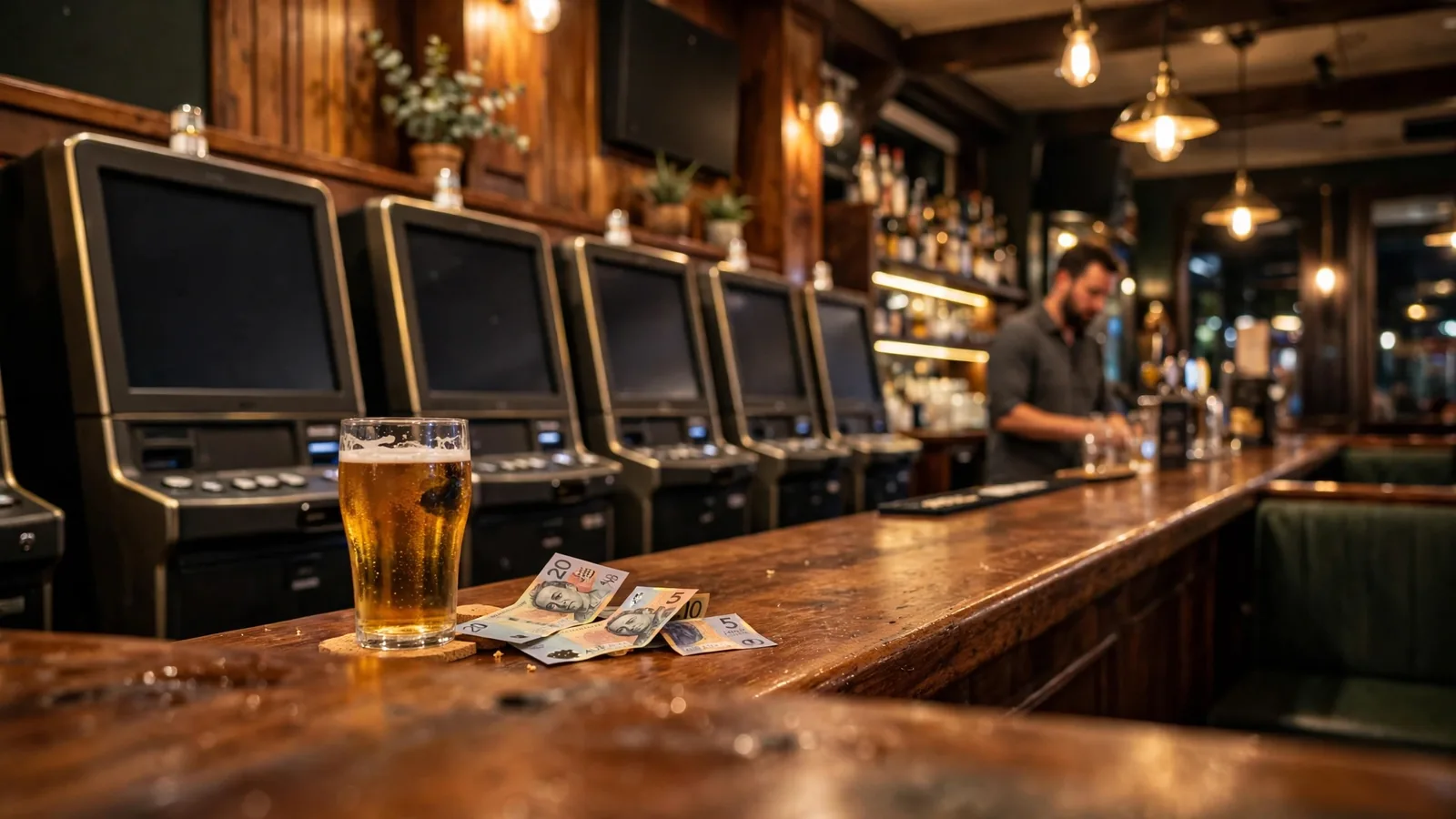
A result saying that a Geelong venue is open is only useful if it refers to the right venue and reflects its current operating status. Treat a search listing as a starting point, not confirmation. Listings can remain visible after details change, and a general description of a venue does not establish that its pokies are operating at the time you plan to visit.
Start by identifying the exact venue you mean. If a result gives a venue name, check that name against the venue’s own current website or official social media account. Look for a recent notice about opening status, rather than relying only on a short summary displayed in search results. If the venue provides a phone number, contacting it directly is a practical way to resolve uncertainty before travelling.
A search result may combine information from different places: a venue’s own page, a map listing, an old directory entry or a user-submitted update. Those sources can disagree. When they do, give more weight to information the venue itself has recently published, and confirm directly if the decision depends on arriving at a particular time.
If you’re looking for pokies options while in Geelong in 2026, this list gives you a concise reference point. Check each operator’s details to see which ones are relevant to your preferences.
Golden Pokies
Golden Pokies is listed with a Curacao license.
Lucky Dreams
Lucky Dreams lists a minimum deposit of A$20 via POLi. Its stated license is Curacao.
Roby Casino
Roby Casino is listed under Curacao eGaming, with Roby Games Ltd named as the company.
Uptown Pokies
Uptown Pokies is listed as operating since 2017 under a Curacao license. Its minimum deposit is A$20.
LevelUp Casino
LevelUp Casino lists a minimum deposit of A$15. Its stated license is Curacao eGaming OGL/2023/174/0082, held by Dama N.V.
GoldenCrown
GoldenCrown is listed under Curacao Gaming Control Board license OGL/2023/176/0095, with Hollycorn N.V. named as the holder.
SkyCrown
SkyCrown lists a minimum deposit of A$30 and a Tobique Gaming Commission license. Its stated payout times are about 10–15 minutes for crypto and 1–5 days for fiat.
Bizzo Casino
Bizzo Casino is listed under the Curacao Gaming Control Board, with TechSolutions Group N.V. named.
JustCasino
JustCasino is listed with a Curacao Gaming Control Board license.
Thor Casino
Thor Casino lists a minimum deposit of EUR 20. Its stated license is Curacao – Antillephone N.V., with Versus Odds B.V. named.
Check that the information refers to the same venue throughout. Similar names, abbreviated names and nearby businesses can make it easy to open the wrong listing. Confirm the address shown by the venue against the address in the result you found. This is a basic identity check, not proof that the venue is open; it prevents you from treating details for one place as details for another.
Be cautious with an “open now” label. It may be generated from stored hours rather than a live report from the venue. Even when the displayed hours are accurate as a schedule, they do not necessarily confirm that the venue has opened as planned or that its pokies are available. If an immediate visit matters, use a current announcement or direct contact rather than inferring availability from the label alone.
“Open” can refer to different things. A venue may be open for some purposes while a particular area or service is unavailable. Conversely, a listing may describe the business’s general operating hours without saying anything specific about pokies. Do not treat those statements as equivalent.
When checking, make the point of your enquiry clear: you want to know whether the venue is open now and whether pokies are operating. A broad question about opening hours may produce an answer about the venue as a whole, which may not settle the second point. If the information available online does not distinguish between them, ask the venue directly rather than assuming.
This distinction also matters when a page contains a regular schedule but no current update. A schedule describes the usual plan stated by that source; it is not a real-time confirmation. A temporary change, an unplanned closure or a difference between venue access and machine operation may not appear in the schedule. Treat silence about such details as uncertainty, not as evidence either way.
Before setting out, compare the venue’s own current information with the details in the listing you found. Check the venue identity and address, then look for a recent notice about opening status. If the information is unclear, inconsistent or old, contact the venue and ask specifically about current access and pokies availability.
Keep track of when the information was published or checked. A page with no visible date may still be useful for identifying a venue, but it is weaker evidence of what is happening now. A recent update is more relevant to current status, although direct confirmation is preferable when plans depend on it.
If you cannot confirm the status, avoid converting a search result into a definite answer. “Listed as open” describes what the listing displays; “confirmed open” requires a current statement from the venue or another direct confirmation. That distinction keeps the decision tied to what the information actually establishes.
A search for Geelong pokies open now may return useful leads, but the wording of the result does not itself verify a venue’s current operation. Check the exact place, the freshness and source of the status information, and whether it covers pokies rather than only general venue access. If those points remain unresolved, treat the status as unconfirmed before making the trip.
Verification Sequence
Compare Information
Compare the venue’s own current information with the details found in the listing, checking the identity and address.
Check Status
Look for a recent notice about the venue's opening status.
Contact Directly
If information is unclear, inconsistent, or old, contact the venue specifically about current access and pokies availability.
A pokie’s return percentage is not a prediction of what you will win from a particular session. It describes a theoretical return across play over time, not a schedule that pays a set amount back after a set number of spins. That distinction matters when you are comparing claims about the best-paying pokies in Geelong: a published percentage, where one is available, cannot tell you what will happen on your next spin or establish that one local venue pays more than another.
Each spin is an independent event determined by a Random Number Generator (RNG). The result of a previous spin does not make a particular result more or less likely on the next one. A run of wins does not mean a loss is now “due”; a run of losses does not mean the game is about to compensate you. The machine’s history may be visible on screen, but that history does not give you a reliable way to predict its next outcome.
Independence also explains why a return percentage should not be treated as a short-session forecast. The percentage represents an aggregate theoretical property of the game, while your experience consists of a limited number of random outcomes. Those outcomes can vary substantially. A game with a higher stated RTP does not promise that you will receive more than you stake, or even that you will receive any particular share back during your visit.
There is another complication: a game’s name alone may not identify its return setting. A specialist review reports that some game providers give casinos a choice of RTP settings for the same pokie. If that arrangement applies, the same game could therefore have different return percentages at different casinos. This is a reported provider arrangement, not proof that every provider offers a choice or that a particular Geelong venue uses a specific setting.
To compare return claims meaningfully, you need information tied to the exact game and the setting in use—not just the title shown on a cabinet or a general description of the game. A figure attached to one version should not automatically be attributed to every version with the same name. Nor should a comparison between games be treated as a comparison between venues unless the relevant settings at those venues are known.
This is why “best paying” is a more demanding claim than it may sound. It requires a clear basis for comparison: what return figure is being used, which version of the game it describes, and whether the setting at the venue matches that figure. Without those details, a ranked list can create an impression of precision without showing that its entries are being compared on equal terms.
A useful way to read an RTP claim is to separate three questions. First, does it refer to the exact pokie you are considering? Second, does it identify the applicable return setting rather than merely naming the game? Third, is it being presented as a theoretical figure rather than a promise about your own results? If those distinctions are not clear, the figure cannot support a confident conclusion about what you will experience.
The same reasoning applies whether you are thinking about a venue in central Geelong or elsewhere in the city. The city or suburb does not change the RNG mechanism, and a venue’s location is not evidence of a particular RTP. A game may be familiar by name, but familiarity does not reveal its active setting. The relevant information is specific to the game configuration, not to the place-name attached to a venue search.
For practical play, treat each spin as uncertain and decide in advance what amount of time and money you are willing to spend. Limits do not change the RNG or improve the chance of a result; they help keep your play within a boundary you have chosen. The central point is simple: past spins do not forecast future spins, and a game title by itself does not establish the return setting. A return percentage can describe a theoretical feature of a particular configuration, but it cannot identify a “best” local pokie or promise a personal outcome.
The rules for online pokies depend on who is providing the service. Under the Interactive Gambling Act 2001, a company must not provide real-money online pokies to people in Australia unless it holds a domestic licence. No such licences have been issued, so there is no Australian-licensed online casino.
This is different from a rule that makes an individual player criminally liable for accessing an offshore site. The law targets operators, not players. Australians are not prohibited from playing on offshore sites that accept them. That distinction does not make those services locally regulated or give you the protections that a domestic licence would provide.
The Australian Communications and Media Authority (ACMA) enforces the Act. It can block access to illegal offshore gambling sites, and internet service providers must comply with its blocklist. A site appearing in a search or loading from a particular connection is therefore not evidence that it is authorised in Australia. Access can also change when a site is blocked or changes its domain.
The central practical risk is the lack of a local remedy if an offshore casino withholds winnings. Australian players have no legal recourse in Australia in that situation. A site may describe its own complaint process or refer to an overseas regulator, but those arrangements do not create an Australian licence or an Australian route to recover disputed funds.
This matters when assessing claims about online play for real money from Geelong. A site advertising a welcome offer, a no-deposit bonus or high betting limits is still an offshore service if it operates without a domestic licence. The wording of an offer does not change the operator’s obligations under Australian law, and it does not provide a local guarantee that a withdrawal will be paid.
Likewise, describing a service as the best-paying option or presenting it as intended for players near Geelong does not establish that it is authorised here. Location-based wording is not a licence, and a promotional claim is not proof of an enforceable right to winnings. Treat such claims separately from the legal question: the relevant point is whether an Australian domestic licence exists. For online casinos, it does not.
No Legal Recourse
Australian players have no legal recourse in Australia if an offshore casino withholds winnings, as these operators are not domestically licensed.
If you are in Australia, the absence of player liability should not be confused with the presence of consumer protection. The operator’s conduct is the target of the law, but if an offshore site refuses to pay, the stated position is that you have no legal recourse in Australia. In practical terms, the legal distinction protects players from being the target of this prohibition; it does not make an offshore operator answerable to an Australian casino regulator.
ACMA’s role is enforcement of the Interactive Gambling Act, including blocking access to illegal offshore services. A block may prevent access, while a site that remains reachable is not thereby approved. The law concerns the service being provided to people physically in Australia, not the city named in an advertisement or the address implied by a search. Calling an offshore site “Geelong online pokies” does not make it a local venue or a domestically licensed casino.
For a clear decision, separate three questions: whether the service is an online casino, whether its operator has an Australian licence, and what remedy is available if a payment dispute occurs. On the current legal framework, real-money online casino games are prohibited for operators in Australia, no Australian online casino licence exists, and disputes with offshore casinos do not have an Australian legal remedy.
A location-based result is only useful if you can tell what place it refers to. A listing that appears for Geelong may be elsewhere in the wider area, while a result described as “near the airport” may not be inside the airport or even at its terminal. Treat those phrases as starting points for checking an address, not as proof of proximity.
For a venue described as being near Geelong Airport, check the listed street address and whether the result refers to the airport itself, an area around it, or a different place with a similar name. “At the airport” and “near the airport” mean different things: the first implies a location on the airport site; the second can cover a broader area. Do not infer either from a page title or map label alone.
The same distinction applies to the CBD. A result labelled central Geelong may use “central” loosely. Look at the address on a map and judge whether it matches the part of the city you intend to visit. A pin can help you orient yourself, but it does not establish what facilities a venue has. Confirm the venue’s own description before relying on a listing.
Map services combine business information, user contributions and location data. A pin may be misplaced, a business label may be abbreviated, or an old listing may remain visible. Compare the map entry with the venue’s own current information, especially the address and the way the venue describes its location. If the two do not agree, treat the location as unresolved rather than choosing whichever result is more convenient.
Pay attention to what the map is measuring. A result shown near a landmark may be close in straight-line distance but harder to reach by road or on foot. Route previews can help you understand access, but they do not prove that a venue offers pokies. Location and facilities are separate claims and need separate confirmation.
“Near me” is also dependent on the device’s location settings. If location access is off or inaccurate, the displayed results may be centred on the wrong place. Entering Geelong or a specific landmark can make the map’s intended area clearer, but the resulting pins still need to be checked against an address.
North Geelong is a distinct area reference, not a synonym for the CBD or the airport. If a listing uses it, verify that its address is actually in the area you mean rather than assuming that a broad Geelong label settles the question. Similar care helps when a result mentions both Geelong and an airport: the wording may describe a search category or nearby landmark, not the venue’s precise position.
Before travelling, make sure the address belongs to the venue you intend to visit and that the venue itself confirms the relevant facilities. A map result can guide you to a location; it cannot, on its own, confirm what is available there.
A “best” label only helps when you know what was compared and what evidence supports the result. For Geelong venues, a reliable comparison would need details tied to individual premises: confirmed venue names, the number of pokies available, and information about the machines at each venue. Without those details, a ranking cannot show that one venue offers a better choice than another.
Treat venue-level claims as claims to verify, not as established facts. A listing may name a business but say nothing about whether it has pokies. A general statement that a venue offers gaming does not establish how many machines it has or which ones are available there. These are separate points, and evidence for one does not prove the others.
When you assess a Geelong venue, keep the checks distinct:
This distinction matters because venue facts and game facts operate at different levels. A statement about a particular game cannot, by itself, establish that the game is installed at a particular Geelong premises. Likewise, a venue’s general gaming description does not supply machine-level evidence.
A list describing the best pokies venue in Geelong should explain its comparison method. Check whether it relies on verifiable venue details or merely repeats a label such as “top-rated” or “popular.” Those descriptions do not identify what was measured, who supplied the information, or whether it applies to the venue you are considering.
Reviews can help you understand what other visitors report, but they are not a substitute for specific machine data. A review about service or atmosphere does not verify a machine count, and a machine count does not establish that visitors will have a particular experience. Keep each claim within the limits of the evidence behind it.
If a listing gives no clear basis for its venue details, do not infer one. A missing count is not evidence that a venue has few or many pokies; an absent game list does not show which games are available. The sound approach is to compare only details that are explicitly attached to a named premises, and to leave unsupported comparisons unresolved. This prevents a polished ranking from being mistaken for a factual account of Geelong’s venues.
A claim that pokies are available around the clock needs to be checked against the hours of the individual venue. The phrase “24-hour pokies” can mean that a venue is open throughout the day and night, but it does not, by itself, establish when its pokies are available. Treat venue access and machine availability as separate details until the venue confirms both.
Opening hours can also be listed in ways that leave important gaps. A venue may publish general trading hours without stating whether the area containing pokies follows the same schedule. If you need to know whether you can play at a particular time, ask about the hours that apply specifically to the pokies, rather than relying on a general statement that the venue is open.
“Open now” is a time-sensitive description, not a standing guarantee. A listing can be out of date, and an advertised schedule may not reflect a temporary closure or a change to operating arrangements. Before travelling, check the venue’s current information and contact it directly if the timing matters. Confirm the relevant day and time, and make clear that you are asking about pokies access, not just whether the venue’s doors are open.
When you see opening hours presented without detail, check what period they cover and whether they apply every day. Look for an explicit statement about overnight access and any differences between the venue’s general hours and its pokies area. If those points are not clear, the safest interpretation is that round-the-clock availability has not been established.
The same distinction matters when comparing information from different listings. One may show the venue’s general schedule, while another may describe access to a particular part of it. Neither should be treated as proof of continuous pokies availability unless the hours are clearly tied to the machines and confirmed by the venue.
For a visit planned around a late-night or early-morning time, verify the details close to when you intend to go. Ask whether the venue will be open then and whether pokies will be accessible throughout that period. A broad label such as “24-hour” is not a substitute for a clear, current answer about the hours you need.
A reference to Crown alongside Geelong does not, by itself, show that Crown operates a pokies venue in the city. Nor does it establish that Crown pokies are available at a Geelong location. Those are separate claims: one concerns who operates a venue, and the other concerns which machines are installed there. Neither should be treated as confirmed merely because the terms appear together in a listing, headline or map result.
To assess a specific claim, look for information that connects the operator, the venue and its location. A page that mentions Crown but gives no identifiable Geelong venue does not establish that connection. Likewise, a page describing a local venue without identifying Crown as its operator cannot support the claim that it is a Crown venue. If the details conflict or the source does not clearly identify the place, the responsible conclusion is that the connection has not been established.
The same distinction matters when someone describes a particular room as the best pokies room in Geelong. “Best” is a comparison, not a verifiable feature on its own. To make that assessment meaningful, you would need clear criteria and comparable information about the venues being assessed. Without those, the label expresses an opinion rather than demonstrating that one room is better than another. No specific Crown room in Geelong can be identified on that basis.
A question about the maximum cash payout at a Geelong pokie also needs a specific machine and venue. A payout limit cannot be inferred from the operator’s name or from the word “pokies”; it depends on the relevant machine’s rules and the applicable venue information. Without verified details for a particular machine at a particular location, quoting a maximum would risk giving you a figure that does not apply. A general claim about Crown therefore cannot answer a machine-specific payout question.
Keep these claims separate when checking what you have been told: whether a Crown-operated venue is in Geelong, whether a named machine is installed there, and what its payout rules say. Evidence for one does not automatically prove the others. If a source does not identify the venue and provide details relevant to the claim, do not treat its wording as confirmation.
A search for pokies in central Geelong can combine several different ideas: a central location, a club setting, and access to gaming machines. Those terms do not establish that a particular club is in the CBD or offers pokies. Treat each result as a lead to verify, not as confirmation.
For a club listing, check whether it identifies the specific venue and whether its own current information describes gaming facilities. A general club directory may confirm that a club exists without saying whether it has pokies. Likewise, a page mentioning Geelong may refer to the wider area rather than the city centre. If the distinction matters, contact the venue and ask directly about its facilities and location.
“Best” is not a measurable description unless the basis for comparison is stated. A result may use the word to attract attention, but that alone does not tell you what was assessed or whether the information applies to a central Geelong venue. Before relying on a recommendation, look for clear criteria and details that can be checked with the venue itself. Do not assume that rankings, photographs or general promotional language establish what is available on site.
Clubs can also have different policies and facilities, so a result about one club should not be applied to another. Keep the venue name, location and description together when checking information; a page that combines details from different places can create a misleading impression.
If you are looking for help controlling gambling, ask the relevant venue about its self-exclusion process and the options it can apply to your visits. Deposit, loss and session-time limits, along with self-exclusion, are responsible-gambling tools. BetStop is a separate service: it applies to Australian-licensed operators and does not bind offshore sites. It should not be treated as a substitute for asking a land-based venue what arrangements it offers.
The useful distinction is between a broad city-wide result and information that specifically identifies a central Geelong venue, its club status and its facilities. If any of those details are unclear, confirm them directly rather than filling gaps with assumptions.
The wording that pairs Parkes with Geelong does not identify a particular place by itself. Parkes could be intended as a place name, part of a venue name, or a term copied into the search without enough context to show what it refers to. Those are possible readings of the wording, not confirmation that a relevant venue or location exists.
Treat the phrase as a prompt to clarify the intended area, not as evidence of a listing. A result that repeats “Parkes” may simply have matched the words; the match does not establish that the page describes a Geelong venue, that its location is in Parkes, or that the information is current. Check the result’s own address and map details, then compare them with an independent listing before relying on it. If the page gives no precise location, the name alone cannot resolve the ambiguity.
This distinction matters when you are trying to identify pokies in Geelong. A broad result about Geelong may not answer a more specific question involving Parkes, while a page mentioning Parkes may refer to somewhere outside the area you intend. Do not infer a connection from a heading, snippet or repeated phrase. Look for consistent location details across the page and the map listing, and confirm that they describe the same place.
The same care applies when judging which Geelong pokies are “best”. A search result’s position or wording is not a measure of quality, and adding Parkes does not make an unsupported location claim reliable. First establish what place the result is about; only then can you decide whether it is relevant to your intended destination.
If you cannot establish what Parkes refers to from the result’s location information, set that result aside rather than treating it as a confirmed Geelong option. This avoids turning an ambiguous place-name into a claim about where a venue is.
“Cashless pokies” can refer to different things: a venue may accept electronic payment, or it may use a cashless system for play. Those are separate arrangements. A payment method’s name, by itself, does not tell you which arrangement a particular Geelong venue has.
PayID is a way to address a bank transfer using an alias rather than entering account details. The alias can be an email address, mobile number or Australian Business Number (ABN). PayID operates through Australia’s New Payments Platform (NPP), a bank-supported network that uses end-to-end encryption. That describes how a transfer is addressed and protected in transit; it does not describe a venue’s pokies or payment facilities.
If a venue mentions cashless play, check what the statement means in practical terms. Does it refer to paying for something at the venue, moving money between accounts, or loading funds into a system used for play? Ask which payment methods are accepted and how transactions are processed. Do not infer that PayID is accepted just because a venue uses the word “cashless”; confirmation needs to come from the venue itself.
The same distinction applies when comparing places in Geelong with venues elsewhere, including Newcastle. A location name or a claim about cashless facilities does not establish that the venues offer the same services. You need venue-specific information to compare them.
PayID support also says nothing by itself about a gambling service’s licensing, fairness or disclosure of game return settings. It is a bank-transfer mechanism, not a measure of those qualities. Keep the question narrow: PayID explains how certain bank transfers can be addressed. It does not verify that a Geelong venue offers cashless pokies, or establish what its payment arrangements are.
You must be at least 18 years old to gamble online in Australia.
You can legally play on offshore sites that accept Australian players, but offering real-money online pokies to Australians without a domestic licence is illegal, and no such licences have been issued. If an offshore casino refuses to pay, you have no legal recourse in Australia.
Each spin is generated independently by a Random Number Generator, so previous wins or losses do not determine the next result. The same game can also have different return percentages at different casinos.