A familiar card network does not guarantee a casino payment will work; availability depends on the transaction and operator.
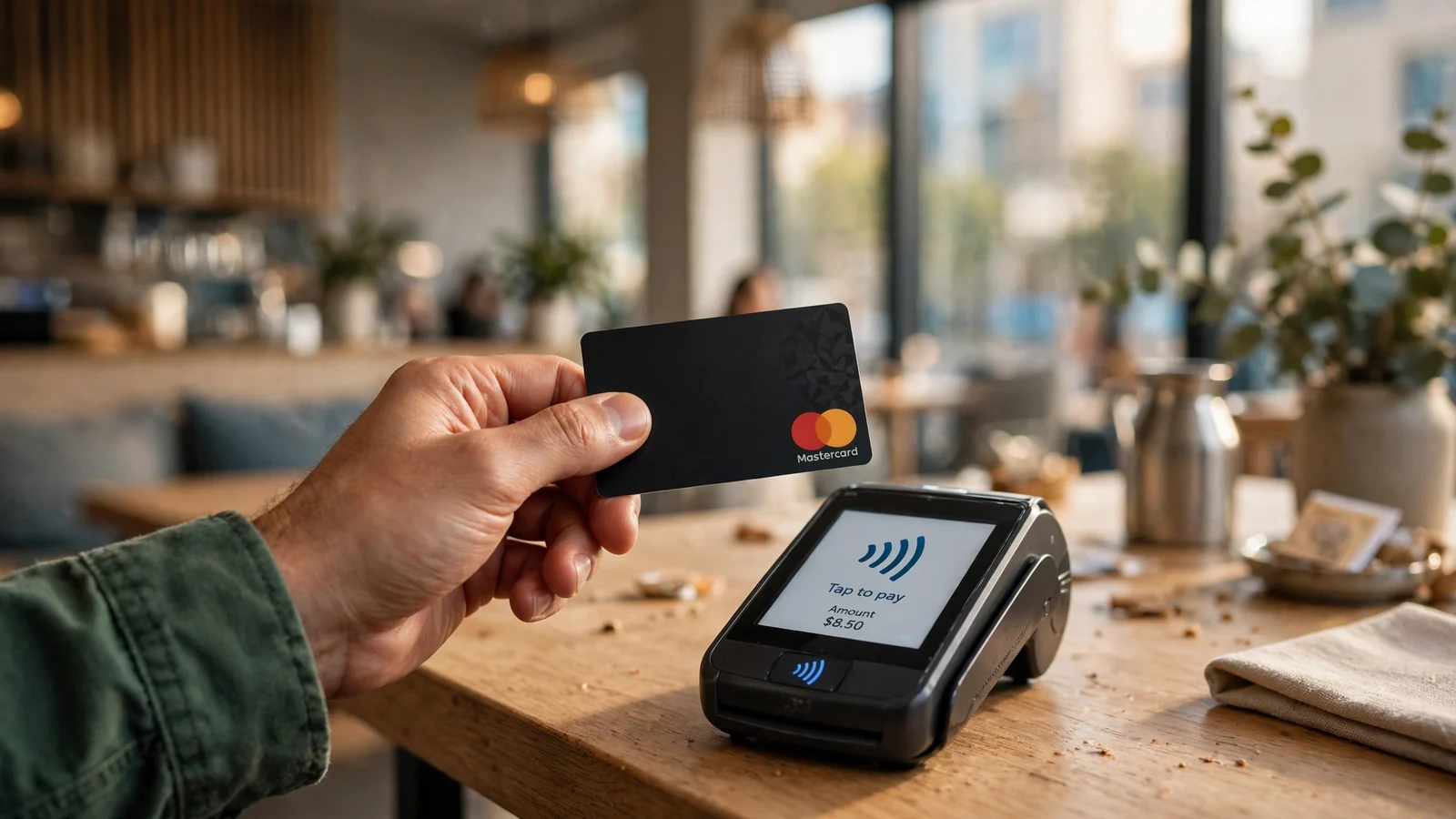
In Australia, contactless credit and debit cards are accepted in almost every part of everyday commerce. Mobile wallets, including Google Pay and Apple Pay, are similarly widespread. That makes tapping a card or phone a familiar way to pay in person. It does not, by itself, establish that a particular card network is available for every online payment or that a payment to a particular kind of service is permitted.
The distinction is between the payment tools people commonly use and the rules that apply to a specific transaction. A card can be convenient at a shop because the merchant, payment terminal and card issuer all support that transaction. An online payment involves a different merchant and payment arrangement. General acceptance at physical retailers cannot confirm that a card will be offered or work in another setting.
For Mastercard, then, Australia’s everyday payment habits provide background rather than a guarantee. The broad use of contactless cards helps explain why card payments feel familiar to many consumers, but it does not prove that every online service accepts Mastercard. Nor does it establish that a card should be used for a particular service. Those are separate questions from whether card and wallet payments are common in daily life.
When choosing a casino that accepts Mastercard in Australia, check the available payment information and the operator’s licensing details before deciding where to play. These brief verdicts highlight the facts provided for each operator.
Golden Pokies
Golden Pokies is listed with a Curacao licence. The provided information does not specify Mastercard deposit details.
Lucky Dreams
Lucky Dreams has a Curacao licence and a stated minimum deposit of A$20 via POLi. The provided information does not confirm Mastercard deposits.
Roby Casino
Roby Casino is listed as licensed by Curacao eGaming under Roby Games Ltd. No Mastercard payment details are provided.
Uptown Pokies
Uptown Pokies is listed with a Curacao licence and has been operating since 2017; its stated minimum deposit is A$20. The provided information does not specify whether Mastercard is accepted.
LevelUp Casino
LevelUp Casino is listed with a Curacao eGaming licence, OGL/2023/174/0082, held by Dama N.V. Its stated minimum deposit is A$15; Mastercard details are not provided.
GoldenCrown
GoldenCrown is listed with a Curacao Gaming Control Board licence, OGL/2023/176/0095, held by Hollycorn N.V. The provided information does not specify its payment methods.
SkyCrown
SkyCrown is listed with a Tobique Gaming Commission licence and a stated minimum deposit of A$30. Its listed payout times are around 10–15 minutes for crypto and 1–5 days for fiat; Mastercard deposit information is not provided.
Bizzo Casino
Bizzo Casino is listed with a Curacao Gaming Control Board licence held by TechSolutions Group N.V. The provided information does not specify Mastercard availability.
JustCasino
JustCasino is listed with a Curacao Gaming Control Board licence. No payment or deposit details are provided.
Thor Casino
Thor Casino is listed with a Curacao licence held by Antillephone N.V. for Versus Odds B.V., and a stated minimum deposit of EUR 20. The provided information does not confirm Mastercard acceptance.
Australian consumers are comfortable moving between cards, mobile wallets and services linked to bank accounts, such as PayPal. The choice can depend on what a merchant accepts and which method a person prefers for that transaction. A phone wallet, for instance, is another way to present a payment credential; its availability in everyday commerce does not mean it is accepted wherever a physical card is accepted.
This flexible mix matters because “card payment” can refer to more than one practical route. You might tap a physical card, use a wallet on a mobile device, or select a bank-linked service. These options are familiar in Australia, but they are not interchangeable in every checkout. Each merchant makes its own payment options available, and a method’s broad presence in one setting says little about whether it appears in another.
The same caution applies to online searches about Australian casinos and Mastercard. Familiarity with card payments is not evidence that an online casino accepts Mastercard, or that a card transaction there is authorised. The words “Australian” and “Mastercard” do not resolve what payment routes are available or whether an operator may lawfully provide the service to people in Australia. A general picture of payment habits cannot answer those service-specific questions.
“Accepted almost everywhere” describes the everyday reach of contactless cards and mobile wallets across Australia. It is a statement about how common those methods are in ordinary payment environments, not a universal rule for every merchant or transaction. The phrase does not mean that every business must accept every card, that all card networks have identical coverage, or that online payment options match in-person ones.
This is why a familiar card brand can create an expectation that does not carry over to a different context. In-person acceptance is shaped by the merchant’s payment arrangements and the point-of-sale setup. An online checkout has its own available methods. Even where a payment option appears, acceptance at one stage should not be confused with confirmation that the overall service is lawful or appropriate for an Australian resident.
Wallet use also illustrates the boundary. Apple Pay and Google Pay are common in everyday Australian payments, but their prevalence does not mean a wallet is available for every online transaction. A wallet may be presented as a distinct option, rather than as a simple extension of tapping a card in a shop. The relevant question is always what the particular merchant offers in the context at hand—not what Australians can commonly use elsewhere.
For readers comparing payment terms, the useful starting point is therefore modest: Australia has a broad everyday culture of contactless card and mobile-wallet use, and people are accustomed to switching among payment methods, including bank-linked services. That context explains why Mastercard may feel like a natural option to consider. It does not establish that a casino accepts it, that a transaction will be approved, or that online gambling services are available to Australian residents.
Attention: Widespread in-person use of Mastercard in Australia does not prove that a specific online casino accepts the card or that the service is lawful.
Treating these as separate facts prevents a common reasoning error: inferring online availability from widespread in-person use. A payment method’s popularity describes consumer practice; it does not certify a merchant’s options or the status of the service. The broader Australian payment mix can help you understand the familiarity of cards and wallets, but it cannot serve as proof about a specific online destination.
A card deposit is not determined by the card brand alone. The payment depends on several separate decisions: whether the service is legally allowed to offer the transaction, whether the cashier presents a card option, whether the card issuer permits the payment, and whether the customer has completed any required account checks. A Mastercard logo on a card does not, by itself, establish that an online gambling payment can be made.
For Australian residents, legality is the first boundary. The Interactive Gambling Act 2001 prohibits operators from providing real-money online casino games to people in Australia. A payment option cannot change that rule or make an unlawful service lawful. Australian consumer law also does not protect players who use offshore casinos. This is important when assessing any claim about a card deposit: a functioning payment route is not evidence that the underlying service is permitted or that the player has local consumer protections.
In a general payment flow, the cashier is where an operator would display the methods it makes available. If a card option is shown, that only describes the operator’s presented route; it does not guarantee that the transaction will be accepted. The payment may also depend on the card issuer’s rules and on whether the transaction is authorised. Those are distinct points in the process, and a failure at one does not establish what happened at another.
The account stage can matter too. Online casinos commonly require customers to complete identity checks before they can carry out financial transactions. This Know Your Customer assessment is separate from entering card details: a card payment method being visible does not mean the account has completed the checks associated with financial activity. The timing and requirements of those checks can depend on the operator, so do not treat a cashier screen as a complete statement of what an account may do.
A useful way to understand the process is to separate the questions involved rather than treating “card deposit” as one yes-or-no feature:
These questions concern different parties and different stages. An answer to one does not settle the others. For instance, a card being accepted for ordinary purchases in Australia says nothing conclusive about a gambling transaction. Likewise, an operator’s display of a payment method does not confirm that a particular card will be approved.
The same distinction applies to a proposed deposit amount. A search for a low-value Mastercard deposit does not establish that an operator permits that amount, that Mastercard is available, or that the payment will be authorised. The amount displayed in a cashier, where a lawful service is involved, would be an operator-specific condition; it is not something that can be inferred from the card network or from a general statement about card use. No amount should be assumed from a search phrase or an advertisement.
If a payment is declined, the outcome alone does not identify the cause. It could reflect a decision by the issuer, the operator’s payment setup, or an account-check issue. Without information from the relevant party, attributing the decline to Mastercard itself would be speculation. Repeating a transaction does not resolve the underlying uncertainty and may expose the customer to further financial or account consequences.
Whether a Mastercard deposit is successful depends on several separate decisions: – Whether the service is legally allowed to operate in Australia. – Whether the operator's cashier presents a card option. – Whether the card issuer permits the specific payment. – Whether the customer has completed required identity checks (KYC).
This is why claims about a “Mastercard deposit” need careful interpretation. The phrase may refer only to a card brand, while leaving out the service’s legal status, the cashier’s actual options, issuer authorisation and customer verification. It also says nothing about whether a given transaction is allowed under Australian law. These conditions cannot be compressed into a guarantee based on the card logo.
For Australian readers, the practical boundary is not simply whether a card route appears on a screen. Real-money online casino services are prohibited when offered to people in Australia, and offshore use does not carry Australian consumer-law protection. Treat payment claims as descriptions of a mechanism, not as an endorsement or assurance that using that mechanism is lawful, protected or certain to work.
A claim that a casino accepts Mastercard is a statement about a particular operator, not a general property of the card network. It does not establish that every Mastercard works, that the option is available to customers in Australia, or that the service is lawful to provide there. A label such as “Mastercard accepted” can therefore be too broad to answer the practical question behind it.
The wording also needs to distinguish deposits from withdrawals. A payment option shown for putting money into an account does not, by itself, establish that the same card can receive a withdrawal. Nor does the word “instant” explain which part of a transaction it describes. It might refer to an operator’s processing step, rather than the time taken for the payment to reach an account. Without clear, operator-specific terms, these labels do not support a reliable comparison of sites.
A useful claim identifies the operator and the exact function it describes. It should make clear whether Mastercard is presented as a deposit option, a withdrawal route, or both, and whether the statement applies to Australian customers. If those details are absent, the claim may describe a different service, customer group, or transaction stage from the one you have in mind.
The source of the statement matters as well. An operator’s own payment terms are more directly relevant to its stated rules than a general casino description, but even a published term does not prove that a transaction will be accepted in every case. A payment method being named is not the same as a completed payment, and a successful deposit would not settle separate questions about withdrawals or legal status.
Customer checks are another part of the picture. Online casinos commonly require identity checks before allowing financial transactions. A statement about card acceptance does not tell you whether an account has completed those checks or whether a transaction can proceed. The payment claim and the account’s readiness are separate matters.
A “best” or “top” label implies that the named services have been compared against a defined standard. Without transparent, current evidence about the relevant payment function, a ranking can create more confidence than its underlying claims warrant. The same applies to lists of sites said to take Mastercard: a list is not proof that each operator currently offers that option to Australian customers.
Names of operators or payment methods appearing in promotional material should not be treated as independent confirmation. A claim needs enough detail to be checked against the operator’s own stated terms, and those terms need to concern the same transaction and customer location. If the details do not line up, the claim remains ambiguous rather than verified.
A list without support for each operator-specific claim would invite you to treat an unconfirmed payment statement as a recommendation. General familiarity with Mastercard, or acceptance of cards in ordinary Australian retail settings, cannot fill that evidential gap.
There is also a separate issue that a payment label cannot resolve. Under the Interactive Gambling Act 2001, operators may not provide real-money online casino games to people physically located in Australia. The Australian Communications and Media Authority is responsible for enforcing that law. A claim about Mastercard acceptance does not make an online casino service lawful to offer in Australia.
The law does not explicitly criminalise an individual for using an offshore casino, but Australian consumer law does not protect players who use offshore casinos. That distinction matters: the absence of player criminal liability is not an endorsement, a guarantee of access, or a substitute for consumer protection.
A payment claim can describe what an operator says it supports. It cannot establish that the claim is current, that it applies to your circumstances, or that the underlying service may lawfully be offered to Australians. Keeping those questions separate is essential when interpreting any casino payment statement.
A deposit and a withdrawal move money in opposite directions, but that does not mean they follow the same route or complete on the same schedule. A deposit request asks the cashier to collect funds from your payment method. A withdrawal request asks it to release funds after the operator has assessed the request and selected an available payout route. The word “Mastercard” by itself does not tell you how long that second process will take.
A deposit confirmation is therefore not a reliable guide to withdrawal speed. Even if a deposit appears promptly, that only describes the result of that particular payment request. It does not show whether withdrawals can be returned to a Mastercard, whether another route is required, or how long any review and transfer stages might take. Treating a fast deposit as proof of an instant Mastercard withdrawal confuses two separate transactions.
A fast deposit does not guarantee a fast withdrawal, as payouts often involve separate review stages and different transfer routes.
A withdrawal request may involve more than the movement of funds. The account and transaction may need to be checked before the operator processes it. Online casinos commonly require customers to complete identity and customer checks before carrying out financial transactions. If those checks have not been completed, or further information is requested, the payout process may not proceed until the review is resolved.
This is a separate stage from the payment network’s handling of a transfer. A claim about a quick transfer cannot establish how long an account review will take; equally, completing a review does not establish how quickly a payment will reach its destination. When a service gives a single timing claim, check what part of the process it describes: request review, approval, dispatch, or receipt.
It would be misleading to convert a deposit experience, a general card-processing description, or a claim about another payment method into a promised Mastercard payout time.
When comparing a stated payout period, identify its start and end points. Does the clock begin when you submit the request, when the operator approves it, or when the transfer is sent? Does the endpoint mean that the operator has released funds or that they have arrived in your account? Those are different milestones. A duration without clear endpoints cannot tell you when you will have access to the money.
Also distinguish availability from speed. A cashier may show a card as a deposit option without confirming that the same card can receive withdrawals. If the return route is unavailable, the service may specify another method; that would be a different transfer and should not be described as a Mastercard withdrawal. The route, review status, and meaning of the timing estimate all matter.
For any service making a rapid-payout claim, look for wording that explicitly covers Mastercard withdrawals and explains when processing begins. If the terms only describe deposits, or use a broad phrase such as “fast payments,” they do not establish a withdrawal time. Do not infer a deadline where none is stated, and do not treat a deposited amount as available to withdraw until the payout conditions and route are clear.
A Mastercard payment option does not determine whether an online casino may lawfully serve someone in Australia. Payment capability and legal permission are separate matters: a card network’s involvement does not authorise an operator to provide a gambling service.
The Interactive Gambling Act 2001 makes it illegal for operators to provide real-money online casino games to people physically located in Australia. The prohibition covers casino-style services such as poker, blackjack, roulette and pokies. It is directed at the operator’s conduct, rather than stating that a player commits an offence simply by using an offshore site. That distinction should not be mistaken for approval, a guarantee of access, or protection if a dispute arises.
The Australian Communications and Media Authority (ACMA) oversees enforcement of the Act. Its role is to apply the rules governing prohibited interactive gambling services; it does not turn a foreign payment option or an operator’s own claims into evidence that the service is lawful for Australian residents.
Legal Risk
The Interactive Gambling Act 2001 prohibits operators from providing real-money online casino games to people in Australia, and offshore use lacks Australian consumer-law protection.
When you see a claim that a casino accepts Mastercard in Australia, it answers only a payment question. It does not establish that the operator is permitted to offer online casino games to people in Australia. Nor does the fact that a player is not explicitly criminalised for using an offshore site change the operator’s obligations under Australian law.
This distinction matters because a service may present itself as available to Australian users while still falling within the Act’s prohibition on operators supplying real-money online casino games to people physically in the country. A card logo, an account-opening process or a successful transaction cannot resolve that legal issue.
Australian consumer law does not protect players who use offshore casinos. If a payment is disputed, winnings are withheld or an account is restricted, you should not assume that Australian consumer remedies will apply to the relationship with a foreign operator. The absence of player criminalisation is not the same as having local consumer-law protection.
For that reason, a page describing casinos that accept Mastercard should not be read as a recommendation to use them. Payment information cannot establish that an offshore service is lawful, locally supervised or subject to Australian consumer protections. The relevant legal question concerns what the operator is providing to people in Australia, not merely which card it lists in its cashier.
Keep those points separate when assessing any claim: the Act governs operators’ provision of online casino games, ACMA enforces that framework, and Australian consumer law does not protect players using offshore casinos. Mastercard acceptance does not change any of these conditions.
A payment method answers a narrow question: can a transaction be attempted through that route? It does not establish what a service provides, who may use it, or whether its activities are lawful in Australia. A Mastercard option in a cashier, if shown, would not by itself confirm that casino games are available to Australian residents or may legally be offered to them.
These are separate checks because payment processing and the supply of a gambling service involve different decisions. A card transaction can be accepted or declined by parties involved in processing it. The operator’s game catalogue and the rules applying to its services are separate matters. Neither outcome proves the other: a payment option does not make a service lawful, and the presence of a game does not show that Mastercard can fund access to it.
For people physically in Australia, the relevant legal boundary is set by the Interactive Gambling Act 2001. It prohibits operators from providing real-money online casino games to people in Australia. The rule concerns the operator’s provision of the service; the Act does not explicitly criminalise a player for using an offshore site. That distinction should not be mistaken for approval or consumer protection. Australian consumer law does not protect players using offshore casinos.
So, when considering phrases such as “casino games with Mastercard,” separate the claims they combine. One is about the payment route; another is about the service and its games; a third is about whether the operator may offer that service to someone in Australia. A statement addressing only the first cannot answer the other two. Likewise, a page describing games or displaying a card logo is not, on its own, evidence of lawful availability to Australian residents.
This distinction also prevents a common inference: that a familiar payment brand makes an online gambling service equivalent to an ordinary Australian merchant. The brand concerns the payment instrument, not the legal status of the recipient or the activity being funded. Payment capability and lawful access are independent questions, and a “yes” to one does not settle the other.
The phrase “Australian casino” can describe several different things: a service aimed at people in Australia, a business based in Australia, or simply a website a person in Australia has found. Those meanings are not interchangeable. In particular, an Australian payment method or an Australian user does not make an online operator Australian, locally regulated, or legally entitled to provide casino games.
Everyday payment habits can make the distinction easy to miss. Contactless credit and debit cards are accepted almost everywhere in Australia, and people commonly move between cards, mobile wallets and bank-linked services such as PayPal. That broad familiarity says something about in-person payments and consumer preferences. It does not establish that a particular online casino accepts Mastercard, or that a site described as an Australian casino has any Australian connection.
The same caution applies to labels such as “Mastercard casino” or “casino using Mastercard”. They describe a claimed payment capability, not the operator’s location or legal status. A payment logo, where displayed, cannot by itself answer whether the service is permitted to provide online casino games to people in Australia.
The legal distinction matters. Under the Interactive Gambling Act 2001, operators are prohibited from offering online casino games to people in Australia. The Act does not explicitly criminalise a player for using an offshore site, but that does not make the service lawful for the operator or give the player the protections available under Australian consumer law. Australian consumer law does not protect players who use offshore casinos.
So, when you encounter “Australian” alongside a card brand, read it as an ambiguous description rather than proof of local ownership, lawful operation or payment acceptance. The terms can combine a user’s location with a site’s advertised payment options while leaving the operator’s actual status unstated. A familiar card brand cannot resolve that ambiguity.
A Mastercard logo or deposit option does not, by itself, tell you whether a service will send a withdrawal back to that card. The payment route for paying in and the route for receiving funds are separate questions. So a casino withdrawal to Mastercard cannot be assumed from the card being available elsewhere in the cashier; the applicable withdrawal terms would need to say that card payouts are supported.
Alternative transfer methods can have different trade-offs. Bitcoin and Ethereum are described as supporting instant deposits and withdrawals with limited or no fees. Those characteristics do not establish that a particular service offers either currency, or that the route is suitable for every user. You would also need to understand how the service handles the transfer and what costs may apply outside its own charges.
Bank transfers work differently: a specialist review characterises them as potentially involving longer waits and higher fees. That is a source-specific description, not a rule for every transfer. The actual timing and cost depend on the route and the terms that apply to it; do not infer them from the words “bank transfer” alone.
Supports instant deposits and withdrawals with limited or no fees, depending on the service.
May involve longer waiting periods and higher fees according to specialist reviews.
Availability for deposits does not automatically guarantee the same route is available for withdrawals.
When comparing a Mastercard withdrawal with these alternatives, separate three points: whether the route is offered, whether it can be used to receive funds, and what timing or fees apply. A payment method may be available for one direction of a transaction but not the other. The name of a card network does not establish the service’s payout rules, and a general description of cryptocurrency or bank transfers does not confirm an operator’s specific arrangements.
For Australian residents, this information should not be read as a recommendation to use an online casino. Australian consumer law does not protect players using offshore casinos. If you are assessing a payment claim, look for terms that explicitly describe withdrawals, rather than treating a deposit option or a general statement about another transfer method as evidence of a Mastercard payout route.
Seeing a card option in a cashier is not the same as being cleared to make a financial transaction. Online casinos typically require customers to complete a Know Your Customer (KYC) assessment before they can transact. That assessment is a separate step from selecting a payment method: choosing Mastercard, for instance, does not itself complete customer checks or confirm that a payment can proceed.
The practical distinction is between the payment route shown on screen and the account’s transaction status. A cashier may present a method, but the operator may still require KYC checks before processing a deposit or withdrawal. Until those checks are complete, the route’s appearance should not be treated as confirmation that a transaction is authorised or will be accepted.
For Australian residents, there is a more important limit: the Interactive Gambling Act 2001 prohibits operators from providing real-money online casino services to people in Australia. Australian consumer law does not protect people who use offshore casinos.
If you encounter a payment screen, distinguish what it shows from what it proves. A listed card method is not evidence that the operator may lawfully provide an online casino service in Australia, and it is not proof that your account has passed KYC. Nor does it establish that a transaction will be accepted. Treat the display as a payment-interface choice only; do not infer legal permission, completed identity checks, or a guaranteed outcome from it.
A Mastercard payment and a promotional offer are separate matters. Even if a payment option is displayed, that alone does not show that a bonus is available, that Mastercard deposits qualify, or that any offer applies to you. Do not treat a reference to a “Mastercard casino bonus” as confirmation of an entitlement. Only the actual terms could describe eligibility, and a payment label cannot substitute for those terms.
There is a more fundamental issue for people in Australia. The Interactive Gambling Act 2001 makes it unlawful for operators to provide online casino games to people located in Australia. That restriction concerns operators; it does not expressly make players’ use of offshore sites a criminal offence. This distinction does not make an offshore offer lawful or turn it into a protected service.
Australian consumer law does not protect players who use offshore casinos. A bonus claim therefore should not be read as assurance that an offer is available, enforceable, or suitable for an Australian resident. Nor does the presence of a card brand establish that the operator may provide casino gambling here.
Keep the questions separate: a payment method is not proof of a promotion, and a promotion is not evidence that the service may lawfully be offered in Australia. Avoid making a financial decision on the assumption that a Mastercard deposit will trigger an incentive. For Australian residents, the governing issue is that online casino games cannot lawfully be provided to them by operators under the Act.
Check the casino’s cashier for American Express as a deposit option. Some casinos accept Amex, but others do not.
Limits are set by each casino and can vary. Check the cashier or the casino’s payment terms for its limits.
Some casinos do not allow withdrawals to Amex. Where they do, you generally need to have deposited with Amex first, and withdrawals can take up to five days to clear.
Yes, some online casinos accept Amex deposits, but not all do. Whether a deposit works also depends on the casino’s payment options and whether the card issuer allows the transaction.
Amex deposits typically have no fee, but a casino may add a 1.5% surcharge, and Amex cards incur a 3% currency conversion fee. Withdrawal fees may also apply.
Amex deposits typically have no fee, though a casino may charge a 1.5% surcharge. A 3% currency conversion fee applies to Amex cards, and withdrawals may incur fees.