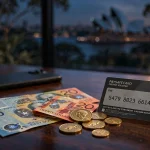
Learn how Australian law distinguishes players from offshore operators, and what PayID, verification and withdrawal terms can—and cannot—tell you.

The legal distinction is between the business supplying an online pokie and the person who plays it. Under the Interactive Gambling Act 2001, a company cannot legally provide real-money online pokies to people in Australia without a domestic licence. No such licences have been issued, so there is no Australian-licensed online casino offering real-money pokies.
That does not mean the law treats an individual player in the same way as the operator. The Act targets the companies providing the service, not the person using it. Australians are not made criminally liable simply for playing on an offshore site that accepts them. The operator’s legal position and the player’s exposure are therefore different questions: a player may be able to access a service while the company supplying it is acting unlawfully under Australian law.
This distinction matters when you see an offshore site described as an option for real-money pokies in Australia. Its availability to a player does not establish that it is licensed in Australia, or that Australian law authorises the business to serve local customers. A foreign licence, if a site claims to hold one, is not an Australian licence. It cannot turn the operator into a domestically authorised casino.
Choosing an online pokies site for real-money play in Australia calls for checking the details that matter to you, including licensing and payment terms. Use these listings as a starting point and confirm current conditions before depositing.
Golden Pokies
Golden Pokies is listed with a Curacao license.
Lucky Dreams
Lucky Dreams is listed with a Curacao license and a minimum deposit of A$20 via POLi.
Roby Casino
Roby Casino is listed with a Curacao eGaming license held by Roby Games Ltd.
Uptown Pokies
Uptown Pokies is listed as operating since 2017 under a Curacao license, with a minimum deposit of A$20.
LevelUp Casino
LevelUp Casino is listed with Curacao eGaming license OGL/2023/174/0082, held by Dama N.V., and a minimum deposit of A$15.
GoldenCrown
GoldenCrown is listed with a Curacao Gaming Control Board license, OGL/2023/176/0095, held by Hollycorn N.V.
SkyCrown
SkyCrown is listed with a Tobique Gaming Commission license and a minimum deposit of A$30. Its stated payout speeds are around 10–15 minutes for crypto and 1–5 days for fiat.
Bizzo Casino
Bizzo Casino is listed with a Curacao Gaming Control Board license held by TechSolutions Group N.V.
JustCasino
JustCasino is listed with a Curacao Gaming Control Board license.
Thor Casino
Thor Casino is listed with a Curacao license held by Antillephone N.V. (Versus Odds B.V.) and a minimum deposit of EUR 20.
An Australian licence would provide a domestic basis for regulating an online casino. Since no Australian online casino licences have been issued, there is no locally licensed operator against which you can rely on Australian casino regulation as a safeguard. The issue is not whether a website looks professional, accepts Australian customers or offers familiar pokies. Those features do not change the legal status of the service.
The same applies to claims that a site is “legal” because it operates under rules in another country. Such a statement may refer to the laws of the place where the operator is based, but it does not establish that the operator is permitted to provide real-money online pokies to people in Australia. The relevant question under the Australian law is whether the company has a domestic licence. None has been issued for this kind of service.
This is why “online pokies Australia real money” can describe what a player is seeking without describing a locally regulated product. The words do not imply that an Australian-licensed casino exists. In practice, the legal framework leaves a gap between the service a player may encounter online and a service authorised and supervised as an Australian online casino.
Although the law targets operators rather than players, that distinction does not give a player an Australian route to recover money from an offshore casino. If the operator refuses to pay winnings, an Australian player has no legal recourse in Australia against that offshore casino. This is a separate risk from whether the player is personally committing an offence.
A site’s terms may describe how it handles accounts, disputes or payouts, but those terms do not create an Australian licence or guarantee that an Australian authority can compel the operator to honour them. If a dispute arises, the operator may be located outside Australia, and the player cannot assume that Australian legal protections will apply to the relationship. A promise displayed on a website is not equivalent to enforceable local oversight.
For that reason, treat “real money pokies online” as a description of the activity, not as proof of protection. The key legal facts are narrow but consequential: Australian law prohibits companies from providing the service to local customers without a domestic licence; no such licences exist; and players are not the target of that operator-focused prohibition. At the same time, if an offshore casino withholds winnings, Australian legal recourse is unavailable.
Understanding those points helps separate two questions that are often blurred together. One is whether an individual player is liable under the Interactive Gambling Act 2001. The other is whether the business supplying the game is authorised in Australia and whether the player can enforce a claim locally. The first concerns the player’s legal exposure; the second concerns the operator’s status and the practical protection available if something goes wrong. They do not have the same answer.
No Legal Recourse
If an offshore casino refuses to pay your winnings, you have no legal recourse in Australia to recover your money.
PayID is not a separate balance or a card. It is an alias layer on Australia’s New Payments Platform (NPP): instead of identifying a bank account by its account details, a transfer can be addressed using an email address, mobile number or ABN registered as a PayID. The NPP carries the payment; PayID supplies the simpler identifier used to address it.
That distinction matters when you see PayID offered as a deposit method for online pokies. The alias does not itself contain money, and it does not replace the bank account from which a payment is made. To use PayID for real-money play at an Australian online casino, you must first link PayID to a bank account. The account is the source of the funds; PayID provides an alternative way to identify the destination for a transfer.
Think of the process as two connected layers. At the first layer, PayID connects an alias—such as an email address or mobile number—to a bank account. At the second, the NPP moves a payment between accounts. PayID makes an account easier to address, but the transfer still depends on the linked bank account and the payment network.
In practical terms, you select PayID as the payment route, use the relevant PayID details provided for the transfer, and authorise the payment through your bank. The alias stands in for account-identifying details. Once you authorise the transfer, the money comes from the linked account, rather than from a PayID wallet. The casino service is the intended recipient; PayID is not a place where the deposit waits before being forwarded.
This is why having an email address or mobile number is not, by itself, enough to send money through PayID. The identifier must be associated with a bank account, and the payment must be made through the bank connected to that account. If the account has not been linked for PayID use, the alias cannot perform that role for you.
Linking PayID to an account establishes which bank account is associated with the alias. It does not turn the alias into an independent source of funds. When you make a transfer, the bank account remains central to the transaction: it is where the money is held and from where the payment is authorised.
This also explains why a PayID deposit is different from adding funds to a digital wallet. With a wallet, you may first hold a separate balance there. PayID, by contrast, identifies an account through an alias and uses the NPP to move money between accounts. The payment route may look simple on screen, but the underlying arrangement still consists of your bank account, the PayID alias and the NPP transfer.
Australia’s major banks support the NPP, and the platform uses end-to-end encryption. Those are features of the payment infrastructure. They describe how the network is supported and how information is protected in transmission; they do not change the role of the bank account or the alias. PayID remains an addressing layer, while the NPP remains the payment platform.
PayID Deposit Process
Link Account
Associate your PayID (email, mobile number, or ABN) with your bank account.
Select Method
Choose PayID as the payment route on the casino deposit page.
Authorise Transfer
Use the provided PayID details and authorise the payment through your bank to move funds from your account.
When a deposit page offers PayID, separate the steps in your mind: the service gives you payment details, PayID identifies the account to receive the transfer, and your bank account supplies the funds. The alias does not verify that you have a balance, guarantee that a transfer will be accepted, or remove the need to authorise the payment through your bank. It is a way to address a transfer, not a promise about what happens after the money reaches its destination.
The same mechanism applies whether the transfer is connected with online pokies or another kind of payment: PayID is the alias layer, the NPP carries the transfer, and the linked bank account is the source of funds. Understanding those roles makes the payment flow easier to assess without confusing a convenient identifier with a separate payment account.
The change from a free version of a pokie to real-money play is financial, not a change in how an individual spin is generated. Each spin is an independent event determined by a Random Number Generator (RNG). The previous result does not make a win due, and a run of wins does not make the next result less likely to win. The mechanism has no memory of the sequence you have just played.
That distinction matters when you compare free pokies with play for money. In free play, a result has no direct financial consequence. With a stake attached, the same kind of result can affect your balance. Your response to an outcome may change too: you may pay closer attention to each spin or feel pressure to keep playing. Neither effect changes the RNG’s role in determining the outcome.
An RNG selects an outcome for each spin according to the game’s programmed rules. Because spins are independent, a sequence that looks unusual does not reveal what must happen next. A pokie showing several losing outcomes in a row is not building up a guaranteed win. Nor does a recent win establish that another one is likely to follow.
Free play can help you understand controls, symbols and the way a game presents its results. It cannot show you what the next real-money spin will produce. Repeating a sequence in a free version does not make that sequence predictive: each spin remains a separate random event. Treating a short session as evidence of a pattern confuses observed results with the process that generates them.
The difference is also important when you compare two versions of what appears to be the same game. A matching title and visual design do not, by themselves, establish that every setting is identical. In particular, the return-to-player setting may vary.
RTP, or return to player, is a theoretical measure of how much a game is designed to return across a very large number of plays. It is not a forecast for one session or a promise about what you will receive. Individual results can differ substantially from that theoretical measure because each spin is random.
A specialist review reports that some game providers let casinos select from multiple RTP settings for a given pokie. If that applies, the same game title can operate with different return percentages at different casinos. This means you should not assume that the RTP shown in a general game description necessarily matches the configuration used wherever the game appears.
The setting does not make individual spins predictable. It describes a feature of the game configuration and its theoretical return over extensive play, while the RNG continues to determine each spin independently. A higher stated RTP, where verified for the specific version, would not guarantee a better result in a particular session. It also would not mean that the game must repay a specific amount to you after a certain number of spins.
A free version can show how the game behaves on screen: how its controls work, what symbols appear and how outcomes are displayed. It may let you explore the interface without placing a stake. But it does not establish that the real-money version uses the same RTP configuration. To compare versions, look for information that identifies the specific game setting, rather than relying only on the title or appearance.
Keep the questions separate. The RNG explains how each spin’s outcome is selected. RTP describes a theoretical return over extensive play. The stake determines the financial significance of an outcome to you. These are related parts of the experience, but one does not answer the others: knowing the RTP does not reveal the next result, and playing for money does not make the RNG less random.
When you move from free play to real-money play, the key change is therefore exposure to financial outcomes. The underlying independence of spins remains. If a game’s RTP configuration differs between casinos, that is a separate setting to check; it is not evidence that any particular run of spins is predictable.
A win appearing in your balance is not the same as money arriving in your bank account. There are separate steps: the casino records the result, you request a withdrawal, the operator checks that the account and payment request meet its requirements, and the funds are then sent. A delay or limit at any step affects when you can access the balance.
Before requesting your first withdrawal, complete identity verification and provide proof of your address. A specialist review reports that casinos may ask for photographs of identity documents and an address document; some also request a selfie of you holding your ID. The exact document list depends on the operator. Submit clear, current documents through the account’s verification process, and check that the personal details on your account match them. If a document is unreadable or details do not match, the operator may need more information before it can process the request.
Treat verification as a prerequisite, not a formality to leave until after a win. If you wait to gather documents until you want to withdraw, the review becomes another step between the balance and payment. Check the operator’s instructions and complete the required checks before making a withdrawal request. Keep a record of what you submitted and of any messages asking you to correct or replace a document.
Next, check the withdrawal rules for the account. A casino may set a maximum amount that can be withdrawn over a stated period, separate from any checks on your identity. A specialist review reports that some casinos set weekly or monthly caps in the $5,000–$10,000 range. These figures are not a universal rule: the applicable cap depends on the operator’s terms, so read the current withdrawal page rather than assuming a limit from another site applies.
The effect of a cap is easiest to see with a large balance. The same specialist review describes a $50,000 jackpot potentially being paid through a multi-year schedule when a casino’s periodic withdrawal cap is lower than the full balance. In that situation, the win is not necessarily available as a single transfer. The amount released in each period and the total time to receive it depend on the cap and how the operator applies it. A large displayed balance therefore does not, by itself, tell you how quickly you can access the whole sum.
Before you play, locate the rules that specify withdrawal caps and whether they apply per week or per month. Check whether the terms distinguish between account balances, individual requests, or payment methods; do not assume that a limit described in one way covers every case. If the terms are unclear, ask the operator to explain the limit in writing before depositing. A response should identify the relevant cap and how it affects a request to withdraw a balance.
These checks address different constraints. Identity and address documents establish who is requesting payment; withdrawal caps control how much the operator will release within a period. Completing verification does not remove a cap, and a cap does not explain what documents the operator needs. Check both before treating a pokies win as funds you can readily access.
A no-deposit bonus or free-spin offer can show a balance in your account without making that amount immediately withdrawable. The offer’s terms determine what you must do before winnings become eligible for cash-out. Read the wagering requirement, the amount it applies to and any cap on free-spin winnings before treating a displayed balance as money you can receive.
A wagering requirement is a turnover multiplier. Multiply the relevant bonus amount by that figure to find the total bets required. The key detail is the calculation base: the requirement may apply to the bonus alone, or to the deposit and bonus together. Those versions can produce very different turnover.
For illustration, a specialist review describes a $500 bonus with a 40x requirement. If the multiplier applies to the bonus, the required turnover is $20,000. That is the amount you must bet to satisfy the requirement; it is not a prediction that you will retain that amount or finish with a withdrawable balance. A separate example uses a $500 deposit plus a $500 bonus with a 35x requirement applied to the combined amount. The calculation is $1,000 multiplied by 35, or $35,000 in bets.
These examples show why the multiplier alone is not enough to assess an offer. A specialist review suggests looking for requirements of 35x or lower and describes anything above 40x as punishing. Treat that as the review’s assessment, not as a universal standard. Check the operator’s own terms for the exact multiplier and its base; a headline may not make the calculation clear.
Free spins need a separate check. Their winnings may be subject to a cash-out cap, so completing any stated turnover does not necessarily make the full amount withdrawable. The cap limits the amount that can be cashed out from the offer. Look for the cap alongside the wagering rule, rather than assuming that all winnings shown after the spins will be available.
For a no-deposit offer, check whether the terms define which winnings are covered, how turnover is counted and whether a cash-out cap applies. For a deposit offer, confirm whether the multiplier applies to the bonus or to the combined deposit and bonus. If the terms do not clearly identify the calculation base or the cap, you cannot reliably work out the amount of betting required or the maximum eligible payout.
PayID, if listed as a way to fund an account, does not change these bonus calculations. The offer’s terms—not the payment option—set the wagering requirement and any cap. Avoid counting a bonus or free-spin balance as a payout until you have checked both conditions and can calculate what they mean for that offer.
The legal framework separates the operator’s obligations from the tools you can use to manage gambling. Under the Interactive Gambling Act 2001, offering online casino-style games, including pokies, to people in Australia is prohibited unless the operator holds a domestic licence. No Australian online casino licences have been issued. The Australian Communications and Media Authority (ACMA) enforces the Act and blocks access to illegal offshore gambling sites; internet service providers must comply with its blocklist.
The minimum legal age for gambling in Australia, including online pokies, is 18. An age requirement is a basic eligibility rule, not a guarantee that a service is authorised or that you will receive the same safeguards you might expect from a domestic provider. Australian real-money online pokies involve an important gap: there is no locally licensed online casino sector to supervise them.
Responsible-gambling tools can help you set boundaries before play. Deposit limits restrict how much money you can put in, loss limits set a ceiling on losses, and session time limits constrain how long you play. Self-exclusion lets you ask to be prevented from using a service. These controls are useful only where the operator makes them available and applies them; do not assume that a tool offered by an offshore site is backed by Australian regulatory oversight.
BetStop is a national self-exclusion scheme, but it applies to Australian-licensed operators and does not bind offshore sites. Since no Australian-licensed online casinos operate, registering with BetStop should not be treated as a way to block access to offshore pokies. If you are relying on self-exclusion, check which services it covers and use additional barriers where needed, such as removing access to gambling accounts or asking your bank about gambling-payment controls.
The practical limit of domestic safeguards is jurisdictional. ACMA can enforce the Australian law and require internet providers to act on its blocklist, but a block does not itself create an Australian licensing system for offshore casinos. Nor should a site’s own limit or exclusion feature be mistaken for an ACMA-backed protection. Consider the regulator’s reach, the operator’s location and the controls actually available before deciding whether to engage.
A phone changes how you view and control a game; it does not change how a pokie spin is determined. Each spin is an independent random event generated by a Random Number Generator (RNG). That process is separate from whether you open a game in a mobile browser or through an app.
This distinction matters because a screen can make events look connected when they are not. A previous result may remain visible, and the next spin may begin immediately after you tap. Neither the displayed history nor the speed of the controls makes the next result follow from the last one. A sequence that looks unusual is still a sequence of independent outcomes, not evidence that the device has altered the game’s underlying random process.
An app and a browser are interfaces: they present controls and display the game. They are not separate ways of making a spin more or less likely to produce a particular result. Changing from one interface to the other does not turn a losing result into a likely win, and using a larger screen does not change the RNG process. If the same game is available through both routes, the fact that the controls look different does not itself establish that its outcomes are different.
It is useful to separate three things that can be easy to conflate:
The first two affect how you access and see the game. They do not provide a reliable way to predict the third. A button animation, a pause before a result appears, or a change in the layout is part of what you see on screen; it should not be read as a signal about the next outcome.
Mobile play can also make it easier to confuse convenience of access with control over results. A game may be available wherever you can use your phone, but that does not mean you can influence its random process by changing location, rotating the screen, reopening the game, or switching between app and browser. Those actions change the way you reach or view the interface, not the independent nature of each spin.
If you are comparing a mobile view with a desktop view, focus on what the interface actually changes: the visibility and arrangement of controls, how clearly information is presented, and whether the screen is comfortable to use. Do not treat an app label, a smooth animation, or a familiar-looking design as evidence that outcomes are more predictable. Presentation and randomness are different parts of the experience.
The same caution applies to claims that a particular mobile format is “better” for real-money play. The word can refer to a layout that is easier to read or operate, but it cannot mean that the device improves the odds of a spin. A well-designed interface may make controls clearer; it cannot make an independent RNG result knowable in advance. Mobile pokies and browser-based games therefore should not be judged as though one format gives you a method for influencing outcomes.
For practical use, keep your attention on the distinction between what you can control and what you cannot. You can choose whether to use a mobile browser or an app interface, and you can decide whether to continue interacting with it. You cannot infer the next spin from the last result or from the way the screen behaves. The RNG remains the mechanism determining each spin, regardless of the device displaying it.
A PayID button can tell you that a site claims to accept transfers through that payment method. It cannot establish that the site is licensed, that its games are fair, or that its published RTP matches the setting used for the games you play. Treat payment availability as a narrow operational detail, not as evidence of trustworthiness.
PayID is described in a specialist review as being treated like other qualifying deposit methods at the sites it covers. That is a statement about payment handling, not independent verification of an operator’s status or game configuration. A new online pokies site may present PayID as a familiar option, but the label alone does not show who controls the service or what protections apply.
Bank acceptance is a separate matter. A specialist review reports that some Australian banks, including members of the Big Four, sometimes block PayID transfers to gambling merchants they recognise. A payment attempt may therefore fail even when a site displays PayID; that failure does not prove the site is unsafe, and a successful transfer does not prove that it is safe. Bank controls can also change, so an old report should not be treated as a guarantee of what your bank will allow today.
For new PayID pokies in Australia, assess each claim on its own terms. A payment logo confirms neither licensing nor fairness, and it does not tell you whether RTP information is complete or accurate. Do not infer those qualities from the deposit route. If you cannot verify what a claim means and who is accountable for it, regard it as unproven rather than letting the presence of PayID fill in the gaps.
The information on this page describes Australia’s market. It does not establish whether an online pokies service based in Papua New Guinea (PNG) may lawfully accept players there, what licence it might need, or which authority would oversee it. Those questions depend on PNG’s laws and regulatory arrangements, not on assumptions drawn from Australian rules.
The Australian position is specific: the Interactive Gambling Act 2001 prohibits operators from providing real-money online casino games to people physically located in Australia, and no Australian online casino licences have been issued. That says nothing by itself about the legal status of an operator in PNG or the rights of a player located there. A service’s use of the words “PNG” or “Papua New Guinea” does not prove where it is licensed, where it operates from, or which jurisdiction governs a dispute.
The same limit applies to practical claims. Australian information about PayID, banks, identity checks, withdrawals or player safeguards cannot confirm that a PNG-based service offers those features on the same terms. Nor does Australian regulator ACMA’s role establish which rules or complaint channels apply to a player in PNG.
Before treating a service as available to you, identify the country where you will be playing and the operator’s actual licensing jurisdiction. Then check the relevant local regulator’s requirements and the service’s own terms. Do not infer legal permission or protection from Australian material alone. If the operator does not clearly identify its jurisdiction and the authority responsible for it, you cannot use this Australian overview to fill that gap.
Yes, Australian players are not criminally liable simply for playing on an offshore site that accepts them. However, companies cannot legally provide real-money online pokies to Australians without a domestic licence, and no such licences have been issued.
You must be at least 18 years old to gamble online in Australia.
Each spin is an independent random event determined by a Random Number Generator. However, some providers let casinos choose from different RTP settings for the same game, so its return percentage can vary between casinos.
There is no Australian-licensed online casino, so you cannot rely on Australian casino regulation to protect you. If an offshore casino withholds your winnings, you have no legal recourse against it in Australia.