Apple Pay availability is a separate question from whether an online casino may lawfully serve people in Australia.

The legal question comes before the payment question. Apple Pay may be familiar as a way to pay in Australia, but a payment method does not change whether an online casino service may lawfully be offered to people in the country. Under the Interactive Gambling Act 2001, operators are prohibited from providing real-money online casino games to people physically located in Australia. The restriction applies to the service, not to the technology used to fund an account.
That distinction matters when you encounter an offshore website describing itself as an Australian online casino or claiming to accept Apple Pay from Australian customers. An offshore location or foreign authorisation does not make the service lawful to provide in Australia. Nor does a payment option create an exception to the Act. Whether a cashier displays a wallet, card or bank-linked service is a separate operational matter; it cannot establish that the underlying casino service is permitted.
The Act’s effect is principally on operators. It does not expressly make an individual player’s use of an offshore casino a criminal offence. That is different from saying that the service is legal, endorsed or protected. The prohibition concerns operators offering the service to people in Australia, while the player’s position is not framed as the same offence. Keeping those two points separate avoids a common misunderstanding: a lack of explicit player criminal liability does not turn a prohibited service into a lawful one.
Apple Pay availability can vary by casino and may not be confirmed by the details available here. Use this list as a starting point, then check each casino’s current cashier options before depositing.
Golden Pokies
Golden Pokies is listed with a Curaçao license. Check its cashier directly to confirm whether Apple Pay is available to you.
Lucky Dreams
Lucky Dreams lists a A$20 minimum deposit via POLi. Its listed license is Curaçao; check the cashier for current Apple Pay options.
Roby Casino
Roby Casino is listed as licensed by Curaçao eGaming under Roby Games Ltd. Check its cashier to see whether Apple Pay is offered.
Uptown Pokies
Uptown Pokies is listed as operating since 2017 under a Curaçao license, with a A$20 minimum deposit. Confirm Apple Pay availability in its cashier before you deposit.
LevelUp Casino
LevelUp Casino lists a A$15 minimum deposit and a Curaçao eGaming license held by Dama N.V. Check its cashier for current Apple Pay availability.
GoldenCrown
GoldenCrown is listed with a Curaçao Gaming Control Board license held by Hollycorn N.V. Check the cashier to confirm whether Apple Pay is available to you.
SkyCrown
SkyCrown lists a A$30 minimum deposit and a Tobique Gaming Commission license. Its stated payout times are around 10–15 minutes for crypto and 1–5 days for fiat; check the cashier separately for Apple Pay.
Bizzo Casino
Bizzo Casino is listed with a Curaçao Gaming Control Board license held by TechSolutions Group N.V. Check its cashier directly for Apple Pay availability.
JustCasino
JustCasino is listed with a Curaçao Gaming Control Board license. Verify its current payment options in the cashier before you deposit.
Thor Casino
Thor Casino is listed with a Curaçao license held by Antillephone N.V. for Versus Odds B.V., and a minimum deposit of EUR 20. Check the cashier to confirm whether Apple Pay is available.
The Australian Communications and Media Authority, commonly called ACMA, administers enforcement of the Act. Enforcement is directed at the prohibited services, and offshore casino sites may be blocked for Australian users. As a result, an operator’s website, account functions or payment route may be inaccessible or interrupted. A page that loads, or a cashier that appears to accept a payment, is not evidence that the operator is entitled to serve Australian residents. Availability and legality are not interchangeable.
This also limits what you can infer from descriptions such as “Australian pokies” or “Australian mobile casino.” Those labels may refer to the audience an operator is trying to reach, the currency or interface it presents, or the way a third party categorises a site. They do not create an Australian licence or override the federal restriction. The same applies to a claim that a casino accepts Apple Pay: it describes a purported payment facility, not the legal status of the gambling service.
Australian consumer law does not protect you when you use an offshore casino. If a dispute arises over an account, a payment or an asserted balance, you should not assume that the protections and remedies available in a domestic consumer transaction will apply. An operator being accessible online, using familiar payment branding or presenting terms for Australian customers does not establish that Australian consumer protections cover the relationship. The distance between the customer and an offshore operator can therefore matter in practice, particularly when the customer seeks to challenge a decision or recover funds.
The legal boundary is relevant even before you consider a deposit. A payment provider’s role in processing a transaction does not make the gambling service lawful, and an account balance does not itself establish that you have an enforceable right under Australian consumer law. Likewise, a failed, reversed or disputed payment does not resolve the separate question of whether the operator was permitted to offer the casino service in Australia. These are distinct issues: the Act governs the operator’s provision of the service, while the payment arrangement concerns how money is handled.
For that reason, searches for an Australian casino that accepts Apple Pay should not be read as proof that such a service is legally available to Australian residents. A statement about wallet acceptance, even if accurate at a particular time, cannot answer the legal question. The relevant boundary remains the same regardless of whether a transaction is presented as a mobile-wallet payment, a card payment or another route.
The practical takeaway is limited but important: the law restricts operators from offering real-money online casino games to people in Australia; it does not explicitly criminalise the player for using an offshore site; and offshore users do not receive Australian consumer-law protection for that use. These points explain why payment availability and legal permission must be treated as separate questions.
Legal Restriction
Under the Interactive Gambling Act 2001, operators are prohibited from providing real-money online casino games to people physically located in Australia.
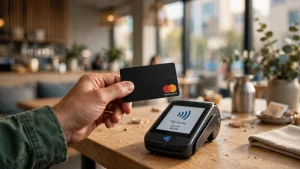
In Australia, paying by tapping a card or phone is part of ordinary commerce. Contactless credit and debit cards are accepted almost everywhere, and mobile wallets such as Apple Pay and Google Pay are similarly widespread. That gives many consumers a familiar choice between presenting a physical card and using a wallet on a device.
These options sit alongside bank-linked services such as PayPal. Australian consumers are comfortable moving between cards, mobile wallets and those services, rather than treating one payment format as the only normal way to pay. The choice can depend on what is available at the point of sale and which method a person prefers to use.
That everyday familiarity explains why Apple Pay may come to mind when someone considers paying online. A wallet can feel like a natural extension of contactless payment: it offers a way to use a device instead of entering card details directly. But familiarity with the wallet in shops and other everyday settings describes consumer habits, not the payment options of every online service.
The distinction matters when the subject is an Australian-facing casino. The fact that Apple Pay is widely accepted by merchants across Australia does not mean that an online casino offers it, or that a person can use it for a particular transaction there. General payment culture and an individual service’s cashier are separate things.
So the useful local context is not that Australians have one standard payment method. It is that people are accustomed to switching among several familiar routes, including contactless cards, mobile wallets and bank-linked services. That context can explain why a reader might look for Apple Pay, but it cannot establish casino acceptance. A wallet’s presence in everyday Australian payments should not be taken as evidence that it is available for gambling-related transactions.
Apple Pay is accepted almost everywhere in Australia, but that broad local availability does not tell you whether a particular online cashier offers it. Acceptance by shops or other services is not evidence that an offshore gambling operator can take the same payment. The merchant, the payment route and the customer’s circumstances all matter.
Treat a claim that a casino “takes Apple Pay” as something to check, not as confirmation. Start with the operator’s own payment information, rather than a general article or a page that groups many sites together. Look for Apple Pay named specifically, and check whether the statement applies to customers in Australia. A reference to “mobile payments” or “digital wallets” is not precise enough to establish that Apple Pay is available.
Then check whether the claim concerns the cashier itself. A logo on a promotional page, a mention in a general list of payment brands, or an Apple Pay button shown in an image may not mean that you can select it for a payment. A clear statement should identify Apple Pay as an available method for the relevant customer group and explain any conditions that affect availability. If those details are absent, the claim remains uncertain.
Be careful with pages that use terms such as “best” or “top”. A ranking does not prove that its payment information is current or applicable to you. Payment options can differ between operators, and a description written for another country may not reflect what an Australian visitor would see. Check the location covered by the statement and when it was last reviewed, if that information is provided.
Do not use a successful Apple Pay payment elsewhere as a test of a casino’s cashier. It establishes only that the wallet works for that other merchant. Nor does an Apple Pay logo by itself establish that a casino supports deposits through it. The relevant question is whether the particular cashier explicitly presents Apple Pay as an available route for an Australian customer.
You can make this check without proceeding to a payment. Review the operator’s published terms and payment information, and look for a specific, consistent description of Apple Pay availability. If the wording is vague or conflicts across pages, do not treat the method as confirmed. Avoid supplying payment details or making a deposit just to find out whether an option works.
This distinction matters because local familiarity with mobile wallets can make an unsupported claim sound plausible. But acceptance across Australian services and acceptance by an individual online merchant are separate things. Only a clear, location-relevant statement about that cashier can answer the availability question; general familiarity with Apple Pay cannot.
A mobile wallet working at Australian shops does not mean it is available in an online gambling cashier. These are separate arrangements. A merchant can accept Apple Pay in person while a particular website’s cashier does not offer it. The payment route exists for that site only if the cashier presents it as an available method for the customer’s account and location.
A deposit has several distinct stages. First, the cashier must offer a payment method. Next, the customer selects it and enters or confirms the amount requested by the site. The payment then has to be authorised through the relevant payment service and accepted by the merchant’s processing arrangements. A general ability to pay with Apple Pay addresses only the wallet’s availability; it does not establish that a gambling site supports the wallet, that a transaction will be approved, or that the funds will be credited.
This distinction matters when you see “Apple Pay” described as a deposit option. The meaningful check is the cashier itself, not the fact that Apple Pay is widely used elsewhere. If the method is not shown there, a wallet stored on your device does not create a route to that operator. If it is shown, the displayed terms still govern the transaction: the amount controls, any stated fees, and any instructions for authorisation. Those details can differ between services and may change, so an amount or process described elsewhere should not be treated as a promise for a particular cashier.
There is no basis for assuming that a small fixed deposit, including a ten-dollar deposit, will be accepted through Apple Pay. A minimum is not a general property of the wallet. It is a condition set by the merchant or payment arrangement, and it can only be understood from the terms presented for that specific transaction. The same applies to maximums and transaction limits: Apple Pay’s acceptance in other settings does not establish the limits applied by a gambling cashier. Do not enter an amount on the assumption that a figure mentioned in a headline or an unrelated payment guide applies to the site in front of you.
A minimum or maximum deposit limit is a condition set by the merchant or payment arrangement, not a general property of the Apple Pay wallet.
Identity checks are another separate part of the process. Online casinos commonly require customers to complete a Know Your Customer assessment before handling financial transactions. This means that access to a cashier does not necessarily mean an account is ready to transact. The operator may require identity information to assess who is using the account before proceeding with financial activity. The payment method does not replace that assessment, and a successful wallet authorisation should not be confused with completion of an identity check.
Keep the roles clear: the wallet handles a payment credential, the cashier presents the merchant’s available routes and terms, and KYC concerns the customer’s identity. A failure at one layer does not, by itself, explain what happened at another. For instance, a cashier may not list the wallet at all; a listed method may not be authorised; or an identity assessment may still be pending. Treating these as one “Apple Pay problem” can lead to incorrect assumptions about what the site supports or what you need to resolve.
The legal setting is decisive in Australia. The Interactive Gambling Act 2001 makes it illegal for operators to provide real-money online casino services to people located in the country. The fact that a foreign site displays a payment option does not make its service lawful for Australian residents. Australian consumer law does not protect players using offshore casinos, so a cashier’s stated process should not be read as a locally protected payment arrangement. This description explains how payment and identity checks are distinct; it is not an invitation to deposit or a recommendation to use an offshore service.
If you encounter payment terms, read them as site-specific conditions rather than general properties of Apple Pay. A wallet’s presence on your device, its acceptance by Australian retailers, and a cashier’s decision to offer it are three different facts. Only the last one concerns that cashier, and none of them changes the legal restriction on operators providing online casino services in Australia.
Apple Pay’s broad acceptance in Australian retail and other everyday settings says something about local payment habits. It does not establish that an offshore gambling website offers the wallet, handles payments securely, or protects customer information appropriately. Those are separate questions, and evidence for one cannot answer the others.
A familiar payment brand can make a transaction feel routine, but the payment method is only one part of the chain. A transaction also involves the website, its cashier, the payment processor and the institutions that issue or manage the underlying account. A wallet appearing in a payment interface would not, by itself, verify how those other parties store information, control access or respond to a disputed transaction. Nor does the absence of a wallet option indicate whether a site’s wider security practices are sound.
The same distinction applies to search results describing a casino as an Apple Pay option. A listing or promotional claim is not a security assessment. It may be outdated, may describe a different location or account type, or may not reflect the payment options currently available to a particular user. Even if a cashier displays the wallet, that confirms only that a payment route is being presented at that moment; it does not independently establish the operator’s safeguards or the route’s terms.
Attention A familiar payment logo is an interface detail and does not independently establish an operator's safeguards or the route's security terms.
Treat payment availability and security as separate checks. Availability concerns whether a particular route is presented and usable. Security concerns matters such as who receives transaction information, how the account is protected, how unusual activity is handled, and what process applies if a payment is disputed. A wallet’s presence does not answer those questions.
Likewise, a payment brand’s recognition is not proof that a gambling operator is trustworthy. It does not establish that the operator is authorised to provide its service in Australia, that its statements about handling personal data are accurate, or that a customer can obtain an effective remedy. A polished cashier or familiar logo is an interface detail, not independent verification.
Online casinos commonly conduct a Know Your Customer assessment before processing financial activity. That assessment concerns the customer’s identity and account checks; it should not be mistaken for a certification of the website’s overall security. Completing identity checks does not demonstrate that the operator’s systems are secure, and a payment method does not replace those checks. Keep the distinction clear: identity verification, payment processing and information security address different risks.
When a site or third party makes a security claim, identify exactly what it covers. A statement about encrypted connections, for instance, would concern information moving between systems; it would not by itself establish how data is retained, who can access it, or how the operator handles account problems. A claim about a wallet would need to be distinguished from claims about the cashier, the operator and any external processor.
Also consider whether the claim is specific enough to assess. “Secure payments” is broad language unless it explains which part of the transaction is protected and by whom. A logo, a short assurance or a list of payment methods cannot fill in those details. If the claim does not identify its scope, do not infer protections that it does not state.
This caution matters particularly where a service operates outside Australia. Australian consumer law does not protect players using offshore casinos, so a familiar payment method should not be treated as a substitute for local consumer protections. The wallet’s local popularity does not extend those protections to an offshore operator.
The practical conclusion is limited but important: Apple Pay’s widespread use in Australia is not evidence that a gambling website accepts it, and acceptance would not establish that the site or transaction is secure. Assess any security statement on its own terms, without treating the payment logo as proof of the wider system.
A payment method and the games a service offers are separate parts of its operation. An Apple Pay option, if shown by a cashier, would describe a way to pay; it would not establish that the service may legally provide casino games to people in Australia. Nor would a mobile interface change that distinction. A mobile casino and its payment route do not override the rules applying to the service itself.
For people physically in Australia, the Interactive Gambling Act 2001 prohibits operators from offering real-money online casino games. The restriction concerns the operator’s provision of the service, not the wallet or card used to fund an account. The Australian Communications and Media Authority (ACMA) administers enforcement of that law. A payment label therefore cannot be treated as evidence that a game offering is lawful or available to Australian residents.
The Act does not explicitly make an individual player’s use of an offshore site a criminal offence. That distinction does not make the service lawful for the operator, guarantee access, or provide consumer protection. Australian consumer law does not protect players using offshore casinos, so a payment method should not be read as a sign that the service is locally regulated or that you have the same remedies available for ordinary domestic transactions.
This matters when a casino payment and its games appear together in one interface. A cashier may present a payment choice independently of the site’s game catalogue, while the site’s catalogue does not alter the legal position. Seeing Apple Pay associated with a casino account is not proof that any particular game can be offered to you lawfully in Australia. The same reasoning applies whether you access a service on a phone or another device.
Treat payment availability and legal availability as separate questions. The first concerns how a transaction might be made; the second concerns whether an operator may offer the underlying real-money casino service to someone in Australia. One answer cannot be inferred from the other. In particular, Apple Pay does not grant permission to access casino games, remove the operator restriction, or change the regulator’s role.
A payment option shown for adding funds does not automatically work for cashing out. A cashier can handle incoming and outgoing payments through different routes, so seeing Apple Pay as a deposit choice would not, by itself, establish that Apple Pay is available for withdrawals. The reverse is also possible: a route offered for payouts may not be available for deposits.
That distinction matters when assessing whether an online casino supports Apple Pay withdrawals. Availability depends on the operator’s payment arrangements, not merely on whether the wallet is widely used for other purchases. The cashier’s withdrawal options are the relevant place to check, and they may differ from the methods shown when you deposit. Do not treat a deposit option as a promise that winnings can be returned through the same wallet.
Identity checks can also affect the transaction. Before handling financial activity, online casinos commonly ask customers to complete a Know Your Customer assessment. This process verifies account details and identity; a payment route being displayed does not mean those checks have been completed or that a withdrawal is ready to be processed. You may need to provide requested information before the operator can proceed.
For an Australian resident, these payment details do not change the legal position of offshore online casino services. The Interactive Gambling Act 2001 prohibits operators from providing real-money online casino games to people in Australia, while Australian consumer law does not protect players who use offshore casinos. A payment method cannot make such a service lawful or provide local consumer protections.
You should distinguish whether Apple Pay is available for deposits, whether it is listed for withdrawals, and whether your account has satisfied identity checks.
If you are checking a cashier, distinguish three separate points: whether Apple Pay appears for deposits, whether it is listed for withdrawals, and whether the account has satisfied the operator’s identity checks. None of those points should be inferred from another. In particular, a casino’s acceptance of Apple Pay for incoming funds does not establish an Apple Pay withdrawal route, and it says nothing by itself about when a withdrawal would be processed.
A request for an instant Apple Pay withdrawal combines two separate claims: that a cashier offers Apple Pay for payouts, and that a payout through it clears instantly. Neither follows from the other. A payment method shown for deposits does not establish that it is available for withdrawals, and a withdrawal option does not by itself establish how long the transaction takes.
Timing is a property of the complete payment route, not just the name displayed in a cashier. A payment can pass through the operator’s processing and the payment service before it reaches its destination. If any part of that route takes time, selecting a wallet does not make the whole transaction instant. The word “instant” is meaningful only when it describes the actual withdrawal process and the point at which the funds become usable—not merely the request or approval stage.
Apple Pay withdrawal timing should therefore be treated as unconfirmed unless the specific cashier and its terms state both that the method can be used for payouts and what timing applies. Do not infer a processing time from Apple Pay’s use for everyday purchases, or from an operator accepting it for deposits. A search phrase asking for an instant payout is not evidence that the route exists or that it meets that timing.
Other payment routes offer a limited comparison, not a substitute answer. Bitcoin and Ethereum can provide instant deposits and withdrawals, with limited or no fees. That describes a possibility for those cryptocurrency routes; it does not establish how any Apple Pay transaction works. A specialist review has also described bank transfers as potentially involving longer waits and higher fees. This is a qualified comparison, not a fixed timetable for every transfer or a prediction of an Apple Pay payout.
When comparing stated withdrawal times, check what event the estimate measures. It may refer to the operator’s handling of a request, or to the time until the payment arrives; those are not necessarily the same. If the terms do not define the starting point and endpoint, the estimate is difficult to use for planning. The same applies to claims of “instant” processing: without a clear description of what becomes instant, the word does not tell you when funds will be available.
A practical comparison should keep method, direction and timing separate. Confirm that the route is explicitly listed for withdrawals, then read the timing and fee conditions for that route. Do not transfer a deposit estimate to a withdrawal, or an estimate for one payment method to another. If Apple Pay is not identified as a withdrawal route, there is no basis for treating it as one merely because it appears elsewhere in the cashier.
No, timing depends on the complete payment route; a withdrawal is only instant if the specific cashier and its terms state so.
No, a cashier may handle incoming and outgoing payments through different routes.
Yes, Bitcoin and Ethereum can provide instant movements with limited fees, but this does not establish the timing for Apple Pay.
For Australian readers, this distinction matters particularly when considering an offshore service. The Interactive Gambling Act 2001 prohibits operators from providing real-money online casino services to people in Australia, and Australian consumer law does not protect players using offshore casinos. Payment claims do not change that legal position or provide a reliable remedy if a transaction is delayed or disputed.
The useful conclusion is narrow: crypto may offer instant movement, while bank transfers may take longer and cost more; neither comparison supplies an Apple Pay withdrawal time. Treat any claim of an instant Apple Pay payout as specific to the operator and route, and rely on it only when the cashier’s withdrawal terms clearly support it.
A payment method and a game category describe different parts of an online service. The cashier determines which payment routes an operator makes available; a category label describes the content offered. Combining the two in a page title does not establish that Apple Pay works for that category, or that the service is available to people in Australia.
No category-specific Apple Pay support can be confirmed. That means you should not infer that a particular category can be accessed or funded through Apple Pay from a general statement about a casino’s payment options. Nor does a list that pairs a wallet with a category prove that the cashier actually offers the wallet. The information needs to be specific to the operator and its current payment arrangements.
There is also a separate distinction between a cashier accepting a wallet and a category being available. Even if a payment route appears in a cashier, that alone says nothing about which content the operator provides, or whether it may lawfully be offered to Australian residents. A category-based label cannot settle either point.
For a precise assessment, keep these questions separate: whether a cashier lists Apple Pay, whether the operator offers a particular category, and whether that service can lawfully be supplied in Australia. Evidence for one does not answer the others. In particular, a general reference to Apple Pay acceptance should not be treated as confirmation of support for every category, while a category page should not be taken as proof of a payment route.
This separation prevents a common reading error: treating two features mentioned together as a verified combination. Without operator-specific confirmation of both, the claimed pairing remains unestablished.
Seeing Apple Pay in a payment context does not tell you whether a promotion applies. A payment option and a promotional offer are separate conditions: one concerns how a transaction is made; the other concerns the rules attached to an offer. Treating them as linked without checking the terms can lead you to assume eligibility that has not been established.
For any offer, the operator’s terms would need to state who qualifies and whether a particular payment method affects eligibility. Do not infer that paying with Apple Pay activates a bonus, or that an offer is available simply because Apple Pay appears among payment options. The same distinction applies to other promotions: the payment route alone does not establish their conditions.
There is also an important Australian boundary. The Interactive Gambling Act 2001 prohibits operators from providing real-money online casino services to people in Australia, and advertising those services or inducements to Australian audiences is restricted. A promotion should not be treated as a reason to use an offshore casino. Australian consumer law does not protect players using offshore casinos, so an advertised offer does not create the safeguards available under Australian consumer law.
When assessing information about an offer, separate three questions: whether the service may lawfully be provided to people in Australia, what the offer’s terms say, and which payment methods the cashier makes available. A claim about one of these does not answer the others. In particular, a reference to an Apple Pay bonus is not proof that the payment method is accepted, that you qualify for an offer, or that the service is lawful to use from Australia.
Check the casino’s cashier for American Express before depositing. If it is listed, select it and enter your card details and deposit amount.
Limits are set by each casino and can vary. Check the cashier for the limits that apply to your account.
Amex deposits typically have no fee, but a casino may add a 1.5% surcharge. A 3% currency conversion fee may also apply to Amex cards.
Some casinos do not allow withdrawals to Amex, and you generally need to have deposited with Amex first. Where available, withdrawals can take up to five days to clear and may incur a fee.
Jackpot City Casino, Spin Palace, Ruby Fortune, Ignition Casino, Joe Fortune and PlayAmo are listed as supporting Amex deposits for Australian players.
Deposits are typically free, though a casino may apply a 1.5% surcharge, and a 3% currency conversion fee may apply. Withdrawal fees can also apply, depending on the casino.
Look for American Express in the casino’s cashier or listed payment methods before you try to deposit. Acceptance can vary between casinos, and an Amex payment may still be declined if the card issuer blocks transactions to that website.