A practical guide to separating a casino’s displayed payment options from transaction processing, account crediting, and withdrawal terms.

A cashier is the part of a casino account where payment methods are displayed and a deposit or withdrawal is initiated. It is not necessarily the system that moves the money. A cashier can collect the details of a payment request, pass them to another service for processing, and then show the result returned by that service. The casino account records whether the request has been credited or otherwise handled.
That distinction matters when you are looking for an online casino that accepts Tether, also called USDT. Seeing a payment option in a cashier would tell you what the casino presents to its customers; it would not, by itself, explain every stage between choosing the option and the funds appearing in an account. The service handling the transaction may be separate from the casino, just as a bank or card provider is separate from a retailer when you pay by card.
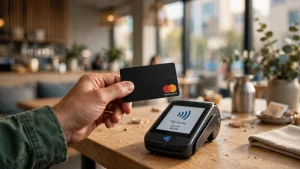
A conventional card payment illustrates the roles involved. You choose a card in the cashier and provide the requested payment details. The casino submits a transaction request through the relevant payment route. The card issuer or other processing parties then handle that request and return a result. If it is approved, the casino can update the account balance; if it is not, the requested deposit may not be credited.
If you’re looking for an Australian casino that accepts Tether (USDT), use this list as a starting point and verify USDT support with the operator before depositing. The details below offer a few known facts to help you assess each option.
Golden Pokies
You have a Curacao license as the only provided detail about Golden Pokies.
Lucky Dreams
You can note that Lucky Dreams has a Curacao license and a minimum deposit of A$20 via POLi. The available details do not confirm whether it accepts USDT.
Roby Casino
You can note Roby Casino’s Curacao eGaming license, held by Roby Games Ltd. The available details do not confirm whether it accepts USDT.
Uptown Pokies
You can consider Uptown Pokies’ Curacao license, its operation since 2017, and its A$20 minimum deposit. The available details do not confirm whether it accepts USDT.
LevelUp Casino
You can note LevelUp Casino’s Curacao eGaming license, OGL/2023/174/0082, held by Dama N.V., and its A$15 minimum deposit. The available details do not confirm whether it accepts USDT.
GoldenCrown
You can note GoldenCrown’s Curacao Gaming Control Board license, OGL/2023/176/0095, held by Hollycorn N.V. The available details do not confirm whether it accepts USDT.
SkyCrown
You can note SkyCrown’s Tobique Gaming Commission license, A$30 minimum deposit, and stated payout speeds of about 10–15 minutes for crypto and 1–5 days for fiat. These details do not confirm whether USDT is accepted.
Bizzo Casino
You have a Curacao Gaming Control Board license, with TechSolutions Group N.V. named in the provided details, as a point to assess Bizzo Casino.
JustCasino
You have a Curacao Gaming Control Board license as the only provided detail about JustCasino.
Thor Casino
You can note Thor Casino’s Curacao license through Antillephone N.V. (Versus Odds B.V.) and its EUR 20 minimum deposit. The available details do not confirm whether it accepts USDT.
Mobile wallets and bank-linked services use a different route, but the division of responsibilities is similar. The cashier presents an option and gathers the information needed to start a payment. A wallet, bank or payment service may then authenticate or process it. The casino relies on the response it receives before recording the deposit. The cashier is therefore the visible starting point, not proof that the casino itself directly handles every part of the payment.
Consumers in Australia are accustomed to moving between cards, mobile wallets such as Apple Pay and Google Pay, and services connected to a bank, including PayPal. Familiarity with those methods does not establish that any particular casino supports them. It also does not establish that the same site accepts USDT. Acceptance depends on what the casino makes available through its own payment arrangements, rather than on what Australian consumers commonly use elsewhere.
When a cashier offers USDT, the first step is still a payment selection: you choose the displayed method and follow the instructions attached to it. The subsequent processing route differs from a card or bank-linked payment. The cashier may rely on a service that handles cryptocurrency transactions, while the casino remains responsible for recording the result in your account.
The important point is not to assume that every system involved is the cashier. The casino determines which options it presents and how it associates a completed payment with a customer account. A separate payment service may carry out or assist with the transaction. Those roles can meet at the point where the casino receives confirmation and updates the account, but they are not interchangeable.
This helps explain why a payment option should be understood as a route with several stages, rather than as a label on a page. Selecting USDT begins a request; it does not mean the account has already been credited. The casino needs a way to identify the transaction and relate it to the correct account. The exact instructions and processing arrangement depend on the route the operator provides, so they should not be inferred from how a different payment method works.
Payment processing is not the only step that can affect whether a transaction proceeds. Online casinos commonly ask customers to complete identity checks before they carry out financial activity. This is generally described as a Know Your Customer assessment, or KYC. It concerns the customer’s identity and account, rather than the technical movement of a payment.
That means there can be separate decisions in the overall process: whether the account has completed the required checks, whether the chosen payment route can process the request, and whether the casino records the resulting transaction. A cashier may display a method while another step still needs attention. Treating these stages separately makes the process easier to understand without assuming that a payment choice alone completes it.
A payment choice in the cashier is the visible starting point of a transaction, but it is not proof that the casino itself directly handles every part of the payment process.
For a search about a Tether casino online, the useful starting distinction is therefore between the casino’s cashier and the parties or systems that process a payment. The cashier is where the method is selected and the request begins. The payment route carries that request, and the casino’s account system records the outcome. Australian experience with cards, wallets and bank-linked services may make this sequence familiar, but it does not confirm USDT availability at a particular site.
A payment label is only a starting point. Before treating a site as a USDT option, check whether its own payment information identifies USDT as an available method for the account and transaction you are considering. A general reference to cryptocurrency does not establish that USDT is supported: different digital currencies are separate payment choices, and a site may support one without supporting another.
Look for the method in the cashier or in the operator’s payment terms, rather than relying only on a general description elsewhere on the site. Check that the information applies to Australian customers and to the relevant account type. If USDT appears only in a broad list of possible methods, without a clear explanation of where and when it is available, the listing does not confirm that you can use it.
Payment terms can describe a method at different levels of detail. “Cryptocurrency” is a category; USDT is a particular currency. A useful description should make clear that USDT itself is accepted and specify the steps or conditions relevant to using it. Avoid treating a reference to Bitcoin, Ethereum, or crypto payments generally as evidence about USDT.
Also check whether the cashier presents the method as available to you, rather than merely mentioning it in general terms. Availability can be tied to account details or other conditions stated by the operator. If the payment page and the written terms do not match, or if the wording leaves the route unclear, do not assume that the broadest interpretation is correct. Seek a direct clarification before making a payment.
For an accurate comparison, record what each site actually states: whether USDT is named, whether the terms apply to Australian customers, and whether any conditions limit its use. This is more informative than a list that labels sites “crypto casinos” without showing what that label means for a particular payment method.
A USDT deposit option does not, by itself, establish that USDT can be used to withdraw funds. The two directions may be covered by different terms, so look for a distinct statement about withdrawals. If the site explains deposits but says nothing clear about withdrawals, that is not confirmation of a matching withdrawal route.
Check whether the withdrawal terms require you to use a particular method or impose conditions on the destination of funds. Read the conditions for the account as a whole, not only the short description beside the cashier button. A payment method can be available for one transaction type while another method or process applies to a later transaction.
Fees and limits also need to be checked for each direction. Do not infer that a deposit is free because the cashier does not display a charge at the point of selection, or assume that a stated deposit limit also applies to withdrawals. Limits can be set separately by individual operators and can vary. The relevant terms should identify what applies to the transaction you intend to make.
Payment pages can be brief, while detailed conditions may sit elsewhere in the site’s terms. Read both, and check whether they describe the same method and transaction direction. Look for wording that is definite enough to distinguish actual availability from a general description, and note any conditions attached to the method.
A date or update label can help you judge whether a payment description may need confirmation, but it does not guarantee that the method will be available when you use the cashier. When details are ambiguous, ask the operator to confirm the USDT route, including whether it applies to deposits, withdrawals, or both. Keep the answer with the terms you reviewed so you can compare the explanation with the checkout information.
The same care applies when comparing USDT with familiar card methods. A specialist review has reported that Visa may be accepted more broadly than Amex at Australian online casinos, but payment availability can change and that comparison does not establish anything about USDT. It is not a substitute for checking the site’s current cashier and conditions.
Words such as “best,” “latest,” or “crypto-friendly” do not tell you whether a specific route is available or how it works. A list may combine different currencies or rely on general descriptions. Assess the underlying payment information instead: does it name USDT, identify the customers and transactions it covers, and explain any relevant conditions?
Do not let a prominent USDT label stand in for the details. If the deposit route is described but withdrawal terms are unclear, treat those as two different questions. If the method is mentioned only in a general overview, confirm its status in the cashier and the applicable terms before relying on it. This approach produces a more useful assessment than a ranking, because it focuses on what the payment information actually establishes for the specific route.
A payment method shown in a casino cashier is evidence that the operator presents it as an option. It is not proof that every attempted payment will be approved. A transaction depends on more than the casino’s page: the payment provider and, where relevant, the institution that issued the payment method can also affect whether it proceeds.
This distinction matters when assessing a casino accepting Tether. The cashier may display USDT, but that display alone does not establish that a particular deposit will be accepted. The casino controls which methods it makes available to customers; the service handling a payment may apply its own rules; and a bank or card issuer may make a separate decision about a transaction. These are different points in the payment chain, not one combined approval.
A visible option therefore answers a limited question: the casino is presenting that method as available. It does not answer whether the method will work for every customer, account or attempt. If a payment fails, the page may still be showing a genuine option. The failure could arise at a different point from the casino’s display, so treating the cashier as a guarantee can lead to the wrong conclusion.
A payment method displayed in the cashier is an operator-side statement and does not guarantee that a specific transaction will be approved by the payment provider or card issuer.
Amex provides a concrete example of how the distinction can work. A specialist review has reported that an Amex deposit may be rejected when Amex blocks payments to a particular website. Separately, Australian banks can restrict gambling-related payments made with Amex at the issuer stage. In that case, the casino may list Amex, yet a transaction can be stopped before the casino receives it. The payment method’s presence on the page and the outcome of an individual transaction are not the same thing.
That example concerns Amex. It should not be transferred to USDT: a card issuer’s decision about card payments does not establish how a cryptocurrency transaction is handled. Nor does an Amex example prove that a casino’s USDT option is unreliable. It demonstrates a narrower point: payment availability can involve more than the operator, and a page cannot show every decision made elsewhere in the process.
For you, the useful distinction is between an advertised route and a completed payment. A cashier can identify the methods the operator says it supports, but it cannot by itself confirm that a provider will process a specific attempt. The same caution applies if a site describes itself as an online casino accepting Tether. The description is not equivalent to a successful transaction, and it does not settle the conditions under which the method is available.
This is why a payment label should be read as an operator-side statement, not as a prediction of transaction approval. A casino can make a method visible while another party’s rules or controls affect the result. Conversely, a transaction being declined does not automatically show that the casino never offered that method. Keeping those decisions separate makes the payment page easier to interpret without assuming that a listed option guarantees access or that one payment route’s restrictions apply to another.
A deposit offer and a payment method are separate sets of terms. An offer may describe what happens after an eligible deposit, while the cashier and payment rules determine whether a particular method can be used and what costs may apply. Reading only the offer can therefore leave out conditions that affect the amount you pay or the funds you can later access.
Start by checking whether the offer applies to the payment route you intend to use. Terms may distinguish between payment methods, so the presence of a deposit offer does not establish that a USDT deposit qualifies. Nor does wording about a “welcome” or “no-deposit” offer confirm that such an offer is available with USDT. Treat eligibility as something the written terms must state, not as an assumption based on the offer’s headline.
Then look at the conditions attached to the offer itself. Identify what action triggers it, whether you must opt in, and what restrictions apply to funds credited under it. The headline amount alone cannot tell you whether the offer suits your intended use. If the terms are unclear about a payment route or a condition, the uncertainty remains; a broad promotional description does not resolve it.
Payment costs matter independently. A specialist review has described Amex deposits as often fee-free while noting that fees depend on the casino and that withdrawals may carry a charge. The same type of review has reported that a casino may add a 1.5% surcharge to an Amex transfer. These are Amex-specific claims, not USDT fee terms, and they should not be treated as universal or current conditions. For any method, the relevant question is what the cashier and applicable terms say for that transaction.
Deposit offers and payment terms are separate: an offer describes a promotion, while payment terms govern the actual transaction, including fees and withdrawal conditions.
Compare the offer with the full cost and restrictions of the payment route, rather than treating the offer as a discount that automatically improves the transaction. A fee can reduce the value of an offer; a withdrawal charge can affect the later outcome even if the initial deposit has no stated fee. The offer’s conditions may also limit how credited funds can be used or withdrawn, so read those rules alongside the payment terms.
Searches for free play, a deposit bonus, or an offer requiring no deposit do not establish that a particular site provides one, or that it can be used with Tether. The distinction is practical: an offer describes a promotion, while payment terms govern the transaction. Neither substitutes for the other, and a promotional headline cannot confirm the fees or withdrawal conditions attached to a specific USDT route.
A casino’s game catalogue and its payment methods describe different parts of its service. A listing for Tether (USDT) in a cashier, if present, would concern how a payment may be submitted. It would not identify the games offered, show that a particular game can be played using USDT, or establish that any game is available to you.
The distinction matters because payment labels and game descriptions answer separate questions. A cashier may name a currency or payment route, while a catalogue may describe the content accessible through an account. Neither display proves what appears in the other. So a reference to a Tether casino payment should not be read as evidence about a “Tether game” or a set of games designed specifically for that currency.
The same applies to searches for casino games associated with Tether. A payment method does not change the rules, format or content of a game. Nor does the presence of a game category establish that USDT can be used to fund activity connected with it. To establish either point, the relevant information would need to describe the game and the payment route separately, rather than rely on a general label.
A bonus mention does not bridge that gap. A Tether-related offer, if described by a service, would be a separate claim about promotional conditions; it would not prove which games are available or that the payment method works for every game. Likewise, a game listing cannot establish that an associated deposit or withdrawal route exists. Treat these as independent details, not as parts of one implied feature.
The word “anonymous” also should not be inferred from a payment label. Seeing USDT named as a payment option would not, by itself, explain what information an account requires or what checks apply. The label describes a possible payment method, not the identity rules or the full terms of using a service.
For Australian readers, there is a further boundary: under the Interactive Gambling Act 2001, operators cannot provide online casino games to people in Australia. The law does not explicitly make it a crime for a player to use an offshore site, but that distinction does not turn a payment listing into confirmation that a service is lawful for an operator to provide here.
Keep the questions distinct: what content is described, what payment methods are listed, and what conditions apply to each. A shared page or brand name does not make the answers interchangeable. Payment information alone cannot establish a game catalogue, and game information alone cannot establish a USDT payment option.
USDT and TRC20 describe different parts of a payment. USDT is the cryptocurrency being transferred; TRC20 identifies a network format used to send it. A cashier that mentions USDT has not necessarily confirmed that it accepts USDT through TRC20. The network matters because a sender and recipient must use a compatible route for a transfer to reach the intended address.
That distinction is important when you encounter claims about an Australian Tether casino. A general reference to cryptocurrency, or to USDT without a network name, does not establish support for a particular USDT route. Nor does a wallet’s ability to send USDT on TRC20 show that a casino can receive it. The casino’s payment instructions would need to identify the supported asset and network clearly.
Do not infer network support from information about other cryptocurrencies. Bitcoin and Ethereum are associated with instant deposits and withdrawals with limited or no fees, but that general point does not establish the speed or cost of a USDT transfer on TRC20. The asset, network, and receiving service are separate parts of the transaction. A statement about one does not settle the terms of the others.
The same care applies to fees and confirmation. A description of a USDT option alone does not tell you what network fee may apply, how many confirmations are required, or how long a transfer will take. Those details depend on the specified route and the receiving service’s instructions. If the network is not named, you cannot safely assume that TRC20 is accepted or choose it because it appears cheaper or faster elsewhere.
Before treating a site as a USDT TRC20 option, look for instructions that explicitly name both USDT and TRC20, and make sure the sending wallet can use the same network. Compare the deposit instructions with the address and network displayed at the point of payment; do not rely on a familiar currency label alone. If the cashier offers no network-specific information, the practical status of that route remains unclear.
A search for a real-money Tether casino may bring together broad cryptocurrency claims and network-specific language. Keep those claims separate: evidence that a service handles cryptocurrency generally is not confirmation that it accepts USDT on TRC20. Likewise, a mention of USDT does not establish that deposits and withdrawals both use that network. Treat the network as a necessary transaction detail, not as an automatic feature of every USDT payment.
A payment method does not change the legal status of the service receiving it. Whether a site describes deposits as being made with Tether (USDT), another cryptocurrency or a conventional payment method, the relevant question is whether it is offering online casino gambling to people in Australia.
The Interactive Gambling Act 2001 places the prohibition on operators: providing online casino games to Australian residents is unlawful. This covers the operator’s provision of the service, rather than making the player’s use of an offshore casino an explicitly criminal offence under that Act. The distinction matters. It does not mean that an offshore casino is authorised to serve Australian customers, or that a particular payment route makes the service lawful.
Legal Warning
Under the Interactive Gambling Act 2001, providing online casino games to people in Australia is unlawful for operators, and Australian consumer law does not protect players using offshore casinos.
The Australian Communications and Media Authority (ACMA) is responsible for enforcing the Act. Its role concerns compliance with the rules for interactive gambling services. A casino’s own statements about accepting Australian customers, or about supporting a cryptocurrency deposit, do not override those rules. Nor does a foreign location or a cryptocurrency payment turn a prohibited service into a permitted one.
There is also a separate consumer-protection issue. Australian consumer law does not protect players who use offshore casinos. If a dispute arises over an account, funds or a transaction, you cannot assume that the protections available in a domestic consumer relationship will apply to an offshore operator. That limitation is distinct from the question of whether the player has committed an offence: lack of player criminalisation under the Act does not provide the protections that would otherwise be absent.
For someone researching a casino that accepts USDT, these points set the boundary for interpreting payment claims. A listed coin or network describes a proposed way to transfer value; it says nothing about whether the operator may legally provide casino games to people in Australia. Likewise, a site’s accessibility or willingness to process a deposit should not be treated as evidence of Australian approval or consumer recourse.
The legal distinction is between the operator’s prohibition on supplying online casino games to Australian residents and the absence of an explicit player offence for using an offshore site under the Act. Separately, Australian consumer law does not protect players using those offshore casinos. A payment label cannot remove either limitation.
Before you submit a USDT transaction, check what the site requires from you before it will allow financial activity. A cashier can display a payment method while your account is still subject to identity checks. Those are separate conditions: seeing USDT listed does not tell you whether you can transact before completing verification.
Online casinos commonly ask customers to complete a Know Your Customer (KYC) assessment before they can make financial transactions. The assessment concerns your identity, so read the account requirements rather than relying on a payment-method label or a claim that an account is “no KYC”. If the requirements are unclear, do not assume that you can deposit first and provide documents later—or that verification will not be required at all.
Check when the assessment applies. The relevant wording should tell you whether identity checks are needed before a deposit, before a withdrawal, or at another point in the account process. If the site does not explain this clearly, the uncertainty matters: you may be unable to proceed with a transaction until the requested checks are complete.
Also look for instructions on how verification is completed and what happens if the information you provide cannot be confirmed. The terms should make the process understandable before you send funds. Avoid treating a brief “no KYC” statement as a substitute for account terms that explain verification requirements; broad claims can omit conditions that apply to particular accounts or transactions.
For a casino that presents USDT as a payment option, keep identity checks distinct from the transfer itself. Confirm that you understand the account requirements before initiating a transfer, and do not infer that using cryptocurrency removes those requirements. A payment method describes how funds may be sent; it does not, by itself, establish what checks the account holder must pass.
Pause if the cashier, account terms and verification instructions appear to conflict. For example, a payment option may be visible while the account page says verification is needed before financial activity. In that case, the account requirement is a material part of the transaction process, not a detail to resolve after submitting payment. Clear, consistent instructions let you understand the sequence before you act; unclear instructions leave you unable to predict whether the account can proceed.
A live-dealer category and a USDT payment option describe different parts of a casino’s service. The category indicates that games are presented with a live dealer; it says nothing by itself about which payment methods the cashier accepts. Likewise, a reference to cryptocurrency does not establish that USDT is supported, or that it can be used for both deposits and withdrawals.
Treat these as separate claims that need separate confirmation. A page describing live-dealer tables cannot verify a tether live-dealer casino, and a payment page naming USDT cannot establish what games are available. Even when both details appear on the same site, one does not prove the other. The relevant terms may also distinguish between depositing and cashing out, so a general mention of a crypto casino is not enough to establish the full payment route.
This matters when a site groups information under broad labels such as “live casino” or “crypto.” Those labels may be useful navigation, but they are not transaction terms. Look for explicit wording that identifies USDT as an accepted method and states whether the option applies to deposits, withdrawals, or both. For the games side, check the site’s own description of its live-dealer offering rather than inferring it from a payment-method list. Neither label should be treated as a substitute for the other.
There is also a legal boundary for Australian readers. Under the Interactive Gambling Act 2001, operators may not offer online casino games to people in Australia. The Act does not explicitly criminalise players for using offshore sites, but Australian consumer law does not protect players who use offshore casinos. A description of live dealers or cryptocurrency support does not change that position.
The practical conclusion is narrow: live-dealer availability does not confirm USDT acceptance, and USDT acceptance does not confirm live-dealer availability. Check each claim independently, and do not infer either from the other.
A payment method that appears in a casino’s cashier for deposits is not automatically available for withdrawals. The operator may apply separate rules to money going into and out of an account, and the payment provider may impose its own limits. So a successful deposit does not establish that a later payout can use the same route.
Amex illustrates the distinction. A specialist review reports that Amex deposits at casinos are processed instantly, but that timing describes the deposit side only. It does not predict how quickly a withdrawal will clear. A separate specialist review says an Amex withdrawal can take up to five days to clear; treat that as a reported condition, not a universal processing promise. The same type of review notes that some Australian online casinos do not allow withdrawals to Amex at all.
For a tether casino withdrawal, do not transfer Amex timings or rules to USDT. A payment method’s name alone cannot tell you whether it supports payouts, how long they take, or whether a fee applies. Those details depend on the casino’s stated withdrawal conditions and the specific method offered for withdrawals.
Before depositing, look for a clear distinction between the cashier’s deposit and withdrawal options. Check whether the method is listed for both directions, whether any separate withdrawal conditions are stated, and whether the displayed processing estimate refers to operator approval or to funds reaching you. Those are different stages: a casino can review a payout before the payment route processes it.
Claims such as “instant withdrawal” should therefore be read narrowly. They are useful only if they identify the payment method and explain what stage is instant. A fast deposit does not make a fast withdrawal, and a deposit option does not establish that withdrawals are supported through the same channel. If the cashier or terms leave the payout route unclear, you cannot infer it from the deposit screen alone.
Check the casino’s cashier or payment terms for American Express and confirm that it is available for Australian customers.
Jackpot City Casino, Spin Palace and Ruby Fortune accept American Express. Ignition Casino, Joe Fortune and PlayAmo also support Amex deposits for Australian players.
Amex deposits are typically free, but a casino may add a 1.5% surcharge. A 3% currency conversion fee may also apply.
Some casinos allow Amex withdrawals, but others do not, and a withdrawal fee may apply. You generally need to have deposited with Amex first, and withdrawals can take up to five days to clear.
Limits are set by each casino and can vary. Amex transaction limits are usually higher than those for Mastercard and Visa.
Check whether American Express or your Australian bank is blocking gambling payments to that website.
Deposits are typically free, though a casino may charge a 1.5% surcharge, and a 3% currency conversion fee may apply. Withdrawal fees may also apply, depending on the casino.