A guide to venue terminology, jurisdiction-based licensing, online restrictions, promotional terms and checking review claims.
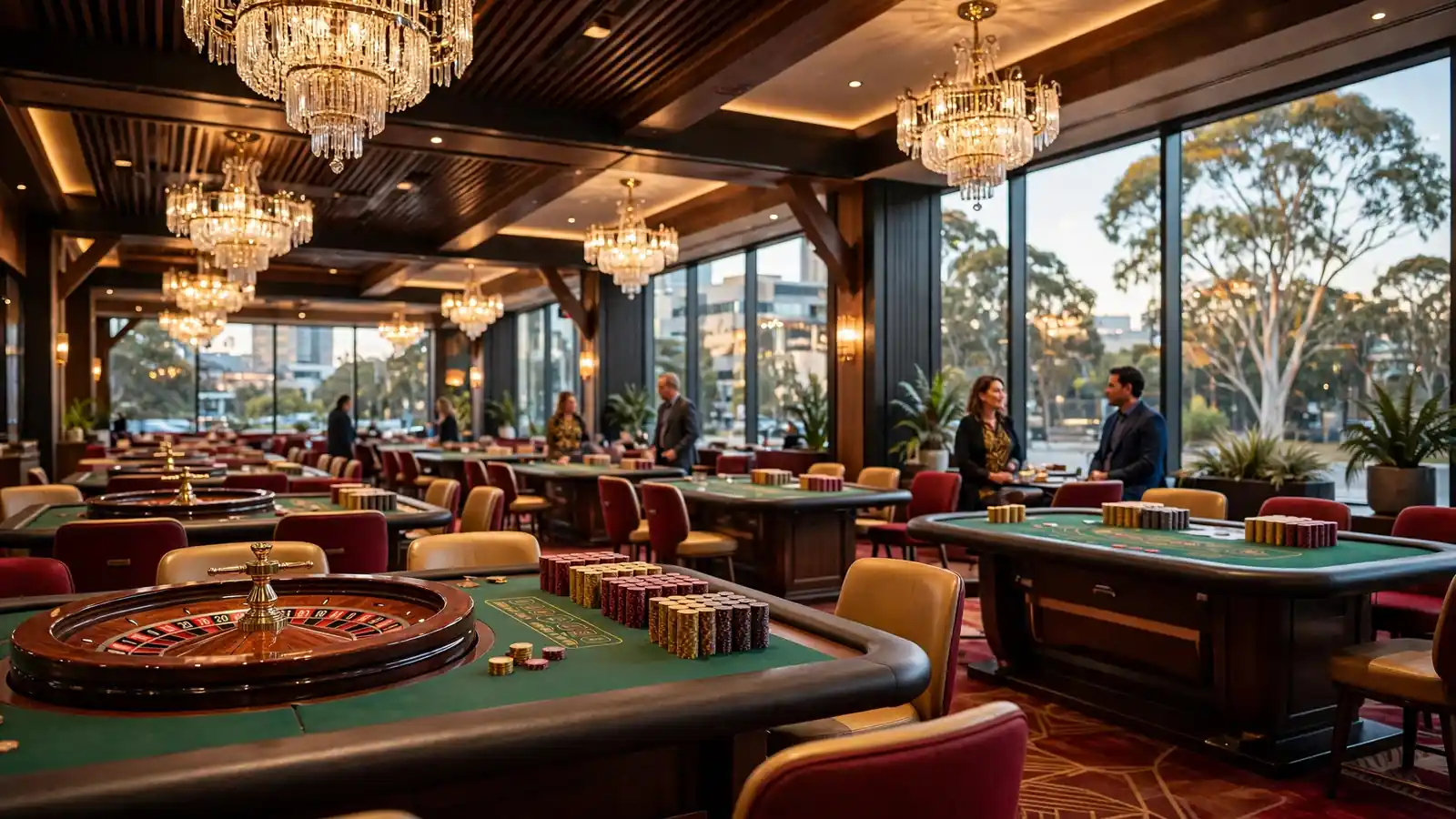
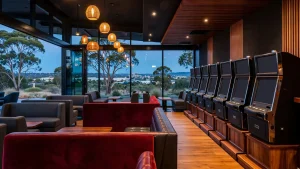
In Australia, “casino parlour” is an informal way to describe the gaming area or casino-style setting within a land-based casino. It does not, by itself, identify a separate class of venue or show that a particular room has its own licence. The important distinction is between the label used to describe a space and the regulated property that operates it.
A full-scale casino is a physical property with activities organised under the authority of a local regulator. Australia does not issue one national casino licence covering every state and territory. Each casino operates under a licence granted in the jurisdiction where that property is located. As a result, the licence attached to a venue—not the words “parlour” or “casino” in a description—establishes the regulatory setting for its land-based operations.
State and territory regulation means that casino oversight is divided among local jurisdictions. A property’s operating authority is therefore connected to its location, and the relevant jurisdiction is responsible for licensing it. This structure is different from a single national system in which one licence would automatically apply across Australia.
Choosing a pokies parlour casino in Australia calls for checking the details that are available before you decide where to play. Use these short verdicts as a reference point, not a substitute for checking current terms and availability.
Golden Pokies
Golden Pokies is listed with a Curaçao licence. That is the available detail for you to consider here.
Lucky Dreams
Lucky Dreams lists a Curaçao licence and a minimum deposit of A$20 via POLi. You can use those details when assessing its fit.
Roby Casino
Roby Casino is listed under a Curaçao eGaming licence held by Roby Games Ltd. You can take note of the named licence holder.
Uptown Pokies
Uptown Pokies lists a Curaçao licence, says it has operated since 2017, and has a minimum deposit of A$20. These details give you a basic point of reference.
LevelUp Casino
LevelUp Casino lists Curaçao eGaming licence OGL/2023/174/0082, held by Dama N.V., and a minimum deposit of A$15. You can check these specifics against your preferences.
GoldenCrown
GoldenCrown lists a Curaçao Gaming Control Board licence, OGL/2023/176/0095, held by Hollycorn N.V. You can use the licence details as a reference.
SkyCrown
SkyCrown lists a Tobique Gaming Commission licence and a minimum deposit of A$30. Its stated payout speeds are around 10–15 minutes for crypto and 1–5 days for fiat.
Bizzo Casino
Bizzo Casino lists a Curaçao Gaming Control Board licence held by TechSolutions Group N.V. You can note the named licence holder when reviewing its details.
JustCasino
JustCasino is listed with a Curaçao Gaming Control Board licence. That is the available detail for you to consider here.
Thor Casino
Thor Casino lists a Curaçao licence through Antillephone N.V. (Versus Odds B.V.) and a minimum deposit of EUR 20. You can use those details as a starting point for your review.
For you, that means a phrase such as “pokies parlour” is not enough to determine how a venue is organised or regulated. It may be used casually to refer to a casino’s gaming floor, but it does not tell you whether the venue is a full-scale casino, which jurisdiction oversees it, or what conditions apply to its operation. Those questions depend on the property and its local licensing framework.
A specialist review describes Australia as having more than 20 full-scale casinos across all eight states. Treat that as a count reported in that kind of review, not as a permanent definition of the industry: the number and classification of venues can change. The count also refers to full-scale casinos, not every place where gambling may be available. A small gaming area or a venue using “parlour” in its name should not automatically be counted as a casino.
The minimum age for entry to a casino is 18 across Australia. Age eligibility is a national baseline, while the casino itself remains licensed by its state or territory. Major Australian casinos require valid photo identification for entry, so being old enough does not remove the need to establish your identity at the door.
A casino’s licensing status and its opening hours answer different questions. The licence identifies the local authority under which the property operates; operating hours describe when the venue is open. All major Australian casinos operate around the clock. That does not mean every part of a property necessarily provides the same service continuously: a casino can contain different areas and facilities, and the statement about 24-hour operation applies to major casinos as venues.
This distinction helps make sense of the word “parlour.” Someone may use it to describe the gaming area rather than the entire property, while the casino’s licence applies to the licensed operation at the property level. The term alone does not establish that a particular room is open at all times, that it has separate entry rules, or that it is a standalone licensed casino. For those details, the relevant venue’s own information and the local jurisdiction’s regulatory framework matter more than the label.
A land-based casino is not simply a room with a particular name. It is a property operating under a jurisdiction-issued licence, with entry governed by the national minimum age and identification requirements at major casinos. Its hours are another practical feature: major casinos operate 24 hours a day, but that fact should not be stretched into a claim about every individual facility inside them.
The same care applies when a venue is described as a “pokies parlour” or “parlour casino.” These expressions can help indicate the kind of setting someone has in mind, but they are not substitutes for the venue’s formal status. You can use the label as a starting description, then distinguish it from the facts that define the operation: the physical property, the state or territory that licensed it, and the conditions of entry.
Keeping those elements separate prevents a common misunderstanding. A room name does not create a licence, and a venue’s opening schedule does not explain who regulates it. In Australia’s land-based casino industry, the property’s local licence provides the regulatory anchor; the parlour wording is only a description of the setting.
A casino-style website can load on your device, accept account traffic or appear at a different web address without being authorised to offer online casino games in Australia. Those are separate questions: access describes whether a site can be reached, while legality concerns what service an operator provides to people located in Australia. Under the Interactive Gambling Act 2001, operators must not provide real-money online casino games to customers in Australia. The prohibition covers casino-style services such as slots, poker and table games.
The Australian Communications and Media Authority (ACMA) administers federal rules for interactive gambling and monitors compliance. It can investigate prohibited services and ask Australian internet service providers to block websites that provide them or advertise them. Blocking can change which domains resolve for Australian users; an operator may also use alternate addresses. A new address, or one that still opens, does not establish that the service is lawful or Australian-licensed.
ACMA reports that enforcement actions have led to more than 1,455 illegal gambling and affiliate websites being blocked since November 2019. The authority has also said that illegal services have withdrawn from the Australian market since enforcement began in 2017. Published accounts disagree on the total: one gives a figure above 210, while another reports more than 190. These are competing reported counts, not a single settled total.
A specialist review has reported ACMA blocking action involving alternate domains associated with Fair Go. That should be read narrowly: it concerns reported enforcement activity, not proof that every address associated with a name is blocked, nor evidence that the service is licensed in Australia. Do not infer a site’s legal status from a domain name, a working page or the ability to start an account.
“Free access” also needs careful interpretation. A page or demonstration mode may be accessible without showing that an operator may offer real-money casino gambling to Australians. The legal test is not whether you can open the website or whether a particular feature appears free; it is whether the service is providing a prohibited interactive gambling service to people in Australia. Promotional claims do not change that distinction.
For you, the practical consequence is that availability is not a reliable compliance check. A site can be reachable before a block takes effect, become inaccessible through an Australian provider, or appear under another address. None of those changes grants permission to provide online casino games. The law targets operators and advertisers; it does not make a player’s access to an offshore site evidence of local authorisation.
When assessing a claim about online play, separate three things: the site’s technical availability, the operator’s legal permission to serve Australian customers, and any action taken by ACMA. Only the first is directly demonstrated by a page loading. ACMA’s blocking powers and enforcement record show why access can change, but a block—or the absence of one—does not itself certify an operator’s status.
Online Casino Legality
Under the Interactive Gambling Act 2001, operators are prohibited from providing real-money online casino games to customers located in Australia.
Words such as “sign-up bonus”, “no-deposit bonus”, “free chip” and “free spins” describe promotional claims. They do not establish that an offer is lawful to advertise to people in Australia, or that a reader should claim it. For online casino services, that distinction matters: Australian law prohibits advertising real-money interactive gambling services, including online casinos, to Australian audiences. A promotion does not become acceptable simply because it is labelled free, limited, or available only to new customers.
The practical way to read this language is to identify what the wording is trying to get a person to do. A sign-up offer links a benefit to opening an account; a deposit offer links one to putting money into an account; and a “no-deposit” label suggests that the advertised benefit does not require an initial payment. “Free chip” and “free spins” are also promotional descriptions. Each is designed to make an online gambling service more attractive, even if the wording makes the benefit sound separate from spending.
That is a description of the language, not an endorsement of the offer. A zero-price label does not settle whether there are other conditions, what the benefit can be used for, or whether advertising it in Australia is permitted. Nor does a promotional headline establish that the service behind it is authorised to provide the activity. The word “free” answers, at most, one narrow question about how the promotion is presented; it does not answer the legal or practical questions around the service.
A sign-up bonus generally frames the benefit as a reward for registering. The reader is being directed towards account creation, rather than simply being given neutral information about a service. A deposit bonus frames the benefit around funding an account. The headline may make the additional value more prominent than the payment or account activity the reader is being encouraged to undertake.
“No deposit” changes the advertised condition, not the nature of the message. The phrase can suggest that a person can receive something without first paying in, but it remains a promotional claim intended to attract attention. It does not mean that the service has no financial features, that later conditions do not apply, or that accepting the offer is legally appropriate. Avoid treating “no deposit” as a synonym for “no risk” or “no obligations.”
A free-chip or free-spin claim works in a similar way: it presents a benefit as a reason to engage with the service. The precise meaning depends on the offer’s wording and conditions, but those details do not turn an advertisement for a prohibited service into neutral information. When the product being promoted is an online casino, the central question is not whether the headline sounds generous. It is whether the promotion is advertising a service that may not lawfully be marketed to an Australian audience.
The same logic applies when a page uses several labels together, such as a sign-up benefit combined with a deposit-related claim. Combining terms can make an offer sound more substantial, but it does not change the underlying function of the message. The words still invite the reader to register, provide funds, or otherwise engage with the service. A series of separate benefits should not be mistaken for independent evidence that each benefit is permissible.
A promotional headline is designed to be easy to notice. Conditions, where provided, explain how the offer is presented and what the advertiser says applies to it. Reading the fine print may clarify the advertiser’s meaning, but it does not by itself make an unlawful advertisement lawful. A detailed set of terms cannot override the restrictions that govern advertising online casino services in Australia.
This is why it is useful to separate two questions. First, what action is the wording encouraging? The answer may be registration, a deposit, or further use of an online gambling service. Second, is that kind of promotion permitted for an Australian audience? The headline cannot answer that. Neither can a promise that an offer is exclusive, complimentary, or available for a short period. Promotional language is not a substitute for the rules that apply to the service and its advertising.
Be cautious with wording that presents a benefit as unconditional while placing qualifications elsewhere on the page. The headline may create one impression and the terms may narrow it. That difference can matter when interpreting what the advertiser is claiming, but it does not change the broader regulatory issue. A person should not infer that an offer is acceptable merely because its conditions are disclosed or because the advertisement describes the benefit accurately.
In ordinary language, “free” means that no price is charged for the item being described. In an advertisement, however, the word can serve a wider persuasive purpose: it draws attention to a benefit and may reduce a reader’s hesitation about registering or engaging. A free offer can therefore still be an inducement. Its promotional role does not disappear because the reader is not asked to pay at the point when the benefit is offered.
The same distinction helps with “no deposit”. It describes the advertised entry condition, not the legality of the service or the promotion. It also does not prove that there are no other requirements. Readers should not fill in unstated details based on the headline, and advertisers should not rely on a short label to convey the full effect of an offer. But even a complete explanation of conditions does not remove the prohibition on advertising online casino services to Australian audiences.
A “bonus” is also not a neutral quality mark. It does not certify fairness, safety, or compliance. It is a promotional term. If a page uses it to encourage people to join or participate, the wording should be understood as advertising rather than as an independent assessment of the service. A positive description of a benefit says nothing, by itself, about whether the underlying activity may be promoted in Australia.
The Interactive Gambling Act 2001 prohibits operators from providing real-money online casino games to people in Australia, and advertising such services to Australian audiences is also banned. That means promotional labels should not be read as invitations to take part. The issue is not solved by changing “bonus” to “gift”, describing a benefit as complimentary, or presenting a sign-up incentive as a customer reward.
The advertising restriction applies to the overall message, not just to one word in isolation. A page can encourage engagement through a headline, a banner, account-registration language, or a description of a benefit. If the message promotes a prohibited online casino service, its persuasive function remains relevant even when it avoids direct wording such as “play now.” A promotion framed as information can still be promotional in substance if it is intended to attract customers.
Advertising restrictions on gambling also impose particular limits on inducements and promotions, especially between 5:00 AM and 8:30 PM. That timing concern should not be treated as a safe window outside those hours for promoting an online casino: the broader ban on advertising real-money online casino services to Australian audiences still applies. A time label, disclaimer, or audience filter does not transform the underlying service into one that may be advertised.
ACMA can request that Australian internet service providers block access to websites that provide prohibited interactive gambling services or advertise them in Australia. That enforcement mechanism is another reason not to treat a promotional page as an ordinary retail offer. A page’s benefit language may be visible, but visibility does not make the advertisement compliant or create a right to claim what it describes.
When you encounter a sign-up, deposit, or “free” claim, read it first as a statement of what the advertiser wants to make attractive. Identify whether the benefit is linked to opening an account, depositing funds, or engaging with an online casino service. Then distinguish that promotional meaning from any implication that the offer is lawful, risk-free, or endorsed by an Australian regulator. The wording alone cannot support those conclusions.
Do not treat an offer’s apparent generosity as evidence of legitimacy. Nor should a detailed set of conditions be mistaken for regulatory approval. Advertising copy describes what the advertiser says it is offering; it does not establish that the service may be provided or promoted in Australia. This applies whether the wording uses “bonus”, “no deposit”, “free chip”, or “free spins”.
A useful reading habit is to notice the action hidden behind the benefit. If the reader is being encouraged to register, fund an account, or use an online casino service, the message is functioning as an inducement rather than as neutral guidance. That remains true when the benefit is described as free or when the advertiser emphasises that payment is not required at the outset.
The safest interpretation is therefore narrow: promotional labels tell you how an advertiser presents an incentive, not whether you should claim it. In Australia, online casino promotions cannot be treated as ordinary offers simply because they use familiar retail language. The legal restriction concerns the promotion of the service itself, and a change in wording does not remove that boundary.
A useful review separates statements that can be checked from impressions that cannot. “The site is easy to navigate” describes one person’s experience; a named address, a stated venue feature or a claim about how access works is more specific and can be tested against other information. Treat the two kinds of statement differently: an opinion may help you understand the reviewer’s perspective, but it does not verify an operational claim.
Review Analysis
Sort statements
Divide the review into checkable details, personal impressions, and unsubstantiated claims.
Verify addresses
Compare the named domain with the current address and check for spelling or ending changes.
Evaluate evidence
Check if the review explains how claims were established rather than relying on a persuasive tone.
Look for the detail behind each assertion. If a review says a venue has a particular facility, check whether that facility is identified clearly and whether the review explains how the claim was established. If it makes a broad claim about reliability or service, ask what observable event supports it. Confident wording, repeated praise and a polished layout are not evidence by themselves. Where the review gives no basis for a claim, record it as unsubstantiated rather than filling in the gap with an assumption.
The same approach applies when a review discusses a website address. A specialist review reports that blocking by Australian internet providers can change which web addresses load, and that replacement addresses may appear later. That means a domain found in an older review may no longer lead to the same page, while a newly appearing address does not, by itself, prove that the service or its terms have remained unchanged. Treat the address as a detail that can become outdated, not as a stable identity.
When a review gives a domain, compare the exact address it names with the address currently presented to you. Note any difference, including changes in spelling or domain ending. Then check whether the review explains the change and whether its claims still refer to the page you can actually see. If it does not connect the old and new addresses with evidence, do not assume continuity simply because the branding or page design looks familiar.
Pay attention to what the review leaves unclear as well as what it states. A description of an attractive interface does not establish who operates the site, whether its terms have changed, or whether a particular claim applies to the current page. A reviewer may describe an experience accurately and still lack evidence for broader conclusions. Keep those conclusions separate from details that can be independently checked.
A practical way to read a review is to sort its statements into three groups: directly checkable details, personal impressions, and claims with no supporting explanation. The first group deserves verification; the second can be read as opinion; the third should not carry weight in a decision. This prevents a persuasive overall tone from making weak claims seem stronger than they are.
Finally, check whether the review itself provides enough context to interpret its statements. If it does not identify the page or address being discussed, explain how a claim was checked, or distinguish observation from recommendation, its usefulness is limited. A careful reading does not require you to reject every review. It requires you to give each statement only the weight its evidence supports.
Australia’s casino locations are spread across major cities and regional centres, so a national count does not tell you where a venue is. A specialist gambling-location review reports gambling facilities in 147 Australian cities. It also identifies Sydney, New South Wales, as the country’s largest gambling city, counting 11 facilities there. These are figures from a review, not a permanent register: venue locations and the way facilities are counted can change, so treat them as a snapshot rather than a fixed map.
Identified as the largest gambling city with 11 reported facilities.
Listed as the city with the most casinos in the Northern Territory, with one facility.
Reports indicate a total of three casinos across three different cities.
Sydney’s place in that account gives a useful metropolitan reference point, but the city count is not the same as a count of casinos alone. The term “gambling facilities” can cover a wider category than full-scale casinos. If you are looking for a casino, check the named venue and its address rather than assuming that a city-level figure tells you how many casinos it contains.
The Northern Territory provides a regional comparison. A specialist gambling-location review reports three casinos across three cities in the territory. In that account, Alice Springs is listed as having one casino, making it the city with the most casinos in the Northern Territory. The figure describes a location count, not the size of a venue or the range of services it offers.
Lasseters Casino is at 93 Barrett Drive, Alice Springs, NT 0870, Australia. That address makes the distinction between a city name and a usable location concrete: “Alice Springs” identifies the city, while the street address pinpoints the venue. If you are planning a visit, use the full address to identify the destination rather than relying on a broad regional label.
The contrast between Sydney and Alice Springs also shows why a national map is more informative when read at more than one scale. A city-level count can indicate where facilities are grouped, while an individual address identifies a particular destination. Neither measure substitutes for the other: a city may be prominent in a broad listing, yet that does not establish the address, current operating arrangements or entry conditions of any specific property.
Location labels can also describe different geographic levels. New South Wales and the Northern Territory are jurisdictions; Sydney and Alice Springs are cities; Barrett Drive is a street address. Keeping those levels separate helps prevent a regional reference from being mistaken for a venue name or a precise destination. The Alice Springs example is especially clear because the city and the street address appear together in a single location record.
When comparing Australian casino locations, therefore, read counts as attributed snapshots and addresses as venue-level details. The review’s reported figures can help orient you between a large metropolitan centre and a regional city, but they should not be treated as a complete, timeless directory. For a specific destination, the named venue and its full address provide the more precise geographic reference.
“VIP parlour” is a label, not a reliable description of a casino’s legal status or entry rules. The wording may suggest a space or service intended for selected guests, but it does not tell you who qualifies, whether access is by invitation or membership, or what facilities are available. Those details depend on the particular venue and its published conditions.
In Australia, the label does not replace the rules that apply to a land-based casino. Casino entry has a nationwide minimum age of 18, and major casinos require valid photo identification. A “VIP” description does not by itself create an exception to those requirements or prove that a venue is open to the public. For a specific property, distinguish the marketing label from the operator’s stated entry conditions.
The word “parlour” can also be used loosely in descriptions of casino spaces. It does not establish that a location is a separate casino, a licensed gaming area, or a private room. If you are assessing a venue, look for concrete information about its operator, location and access conditions rather than treating the label as proof.
The distinction matters because a short name can imply more than it confirms. “VIP” alone does not verify a particular offering, and it should not be read as evidence of special benefits or a guaranteed level of service. Treat it as a description that needs context, not as a category with one standard meaning across Australian casinos.
“Parlour pokies” can refer to the gaming machines people encounter in a casino’s gaming area. To understand the scale of that equipment nationally, a useful measure is the number of machines recorded as both authorised on venue licences and installed in Australian casinos.
That count is 3,308. It describes machines across casino venues, not the number at any one location, the number available to play at a particular moment, or the size of a specific parlour. The licensing and installation criteria matter: a machine included in the count is tied to a venue licence and is reported as installed, rather than being an estimate of the number of machines a visitor might see during a walk through a venue.
The figure also does not describe every kind of gaming machine in Australia. Its scope is casinos, so it should not be read as a national total for machines in pubs, clubs or other gaming venues. Nor does it indicate how the machines are distributed between cities or individual casino properties.
For a reader comparing a particular venue with the broader casino sector, the national count is therefore a scale reference, not a guide to what is on the floor at that venue. A venue-level figure would need to be checked separately against information about that property. The distinction keeps a national inventory from being mistaken for a local description.
A request for real-money pokies at an online casino describes the type of play someone is looking for. It does not show that the service is authorised to provide it in Australia. The distinction is between what a website offers and what Australian law permits an operator to offer to people physically located here.
Under the Interactive Gambling Act 2001, operators must not provide real-money online casino games to customers in Australia. That prohibition covers casino-style games such as slots, poker, blackjack and roulette. A site’s description of itself, its terms of service or its use of a foreign licence does not change that rule. Nor does a domain name that appears Australian.
Access and authorisation are separate questions. A page may load, allow account traffic or appear at an alternate address; none of those conditions establishes that its operator is permitted to provide online casino gambling in Australia. Conversely, a blocked or unavailable address does not by itself explain the operator’s full legal status. The relevant issue is the service being provided to Australian customers, not merely whether a particular web address can be reached.
The Australian Communications and Media Authority enforces the federal interactive gambling laws. It can seek website blocking by Australian internet service providers when a service provides prohibited gambling or advertises it here. Blocking can affect which domains resolve, while alternate addresses may appear over time. A change of address therefore does not create authorisation.
The law’s prohibition is directed at operators, not individual players: a person is not subject to a fine or criminal prosecution simply for playing at an offshore casino. That does not make an online real-money casino service lawful to provide in Australia. Treat the wording of an offer as a description of intended activity, not evidence of permission.