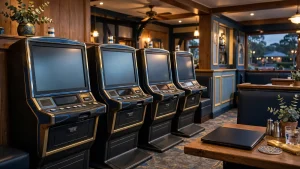
Live-dealer games use a physical table on camera, while software-based games use an RNG to determine outcomes.
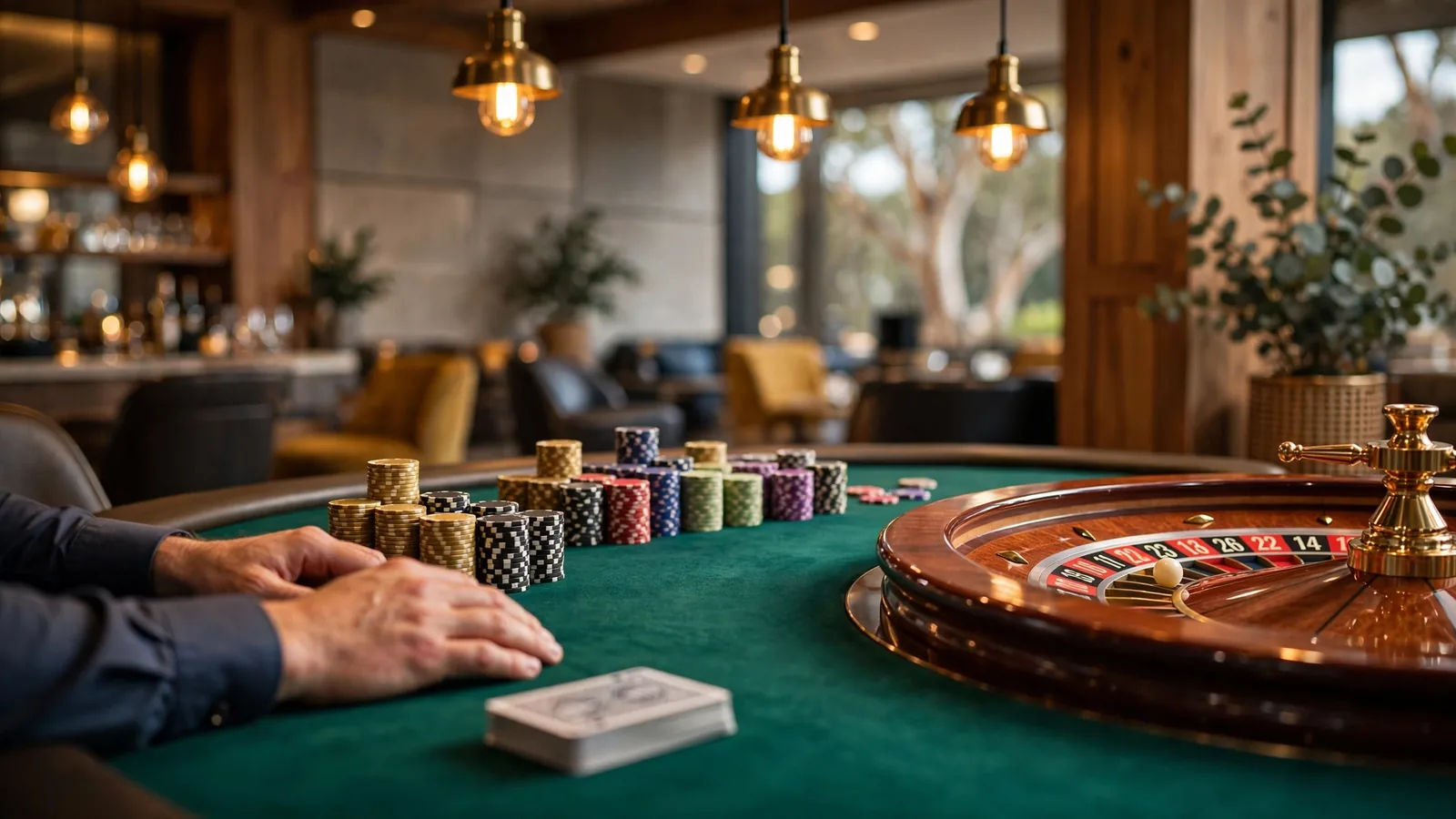
An online table game can be produced in two fundamentally different ways. In a live-dealer format, a real dealer operates real casino equipment while a camera sends a live video stream to viewers. In a software-based format, a Random Number Generator (RNG) determines the result, such as which cards are dealt or where a roulette ball lands. The screen may look similar in both cases, but the source of the outcome is different.
A live-dealer game begins with a physical setup: a dealer, the relevant equipment and a camera. The dealer carries out the action at the table, and the video feed lets viewers watch it as it happens. The result follows from that physical process. For instance, the cards come from the dealer’s handling of cards, or a roulette result comes from the wheel and ball in view.
The stream is the visual connection between the table and the viewer. It shows the dealer and equipment, rather than using animation alone to represent a result created entirely by software. There can still be software around the video that displays the game interface, but the defining feature is that the dealer and equipment are real and the action is streamed live.
Choosing a real-money casino for table games in Australia calls for checking the available information about licensing and payment conditions. Use these short verdicts as a factual starting point when considering your options.
Golden Pokies
Golden Pokies is listed with a Curaçao licence. The available information does not specify its payment conditions or other features.
Lucky Dreams
Lucky Dreams is listed with a Curaçao licence and accepts a minimum deposit of A$20 via POLi. These details give you a clear starting point for checking its payment requirements.
Roby Casino
Roby Casino is listed under a Curaçao eGaming licence held by Roby Games Ltd. The available details identify the licensing entity but do not specify payment conditions.
Uptown Pokies
Uptown Pokies is listed with a Curaçao licence and has been operating since 2017. Its stated minimum deposit is A$20.
LevelUp Casino
LevelUp Casino is listed under Curaçao eGaming licence OGL/2023/174/0082, held by Dama N.V. Its minimum deposit is A$15.
GoldenCrown
GoldenCrown is listed under Curaçao Gaming Control Board licence OGL/2023/176/0095, held by Hollycorn N.V. No payment details are specified.
SkyCrown
SkyCrown is listed with a Tobique Gaming Commission licence and a minimum deposit of A$30. Its stated payout estimates are around 10–15 minutes for crypto and 1–5 days for fiat.
Bizzo Casino
Bizzo Casino is listed with a Curaçao Gaming Control Board licence held by TechSolutions Group N.V. The available information does not include payment details.
JustCasino
JustCasino is listed with a Curaçao Gaming Control Board licence. No further operator details are specified here.
Thor Casino
Thor Casino is listed under a Curaçao licence from Antillephone N.V., with Versus Odds B.V. identified. Its stated minimum deposit is EUR 20.
A live image does not, by itself, explain every part of how a service operates. It identifies the source of the visible game action; it should not be treated as proof of a particular operator’s status or as a guarantee about the service. Nor does the streamed format change the legal position in Australia.
In a software-based online game, an RNG selects the outcome. For a card game, it determines which cards are dealt; for roulette, it determines where the ball lands in the digital game. The display then presents that result through the game interface. There is no physical dealer or wheel required to generate the outcome being shown.
The distinction is about the mechanism, not simply the appearance of the screen. Animated cards or a rendered wheel can depict a software-generated result without any physical equipment behind the image. Conversely, video of a real dealer and table indicates a live production rather than a result generated solely by an RNG.
These descriptions explain how the two formats produce and present results. They do not establish how any particular service handles every technical detail, and they should not be read as a comparison of game quality, odds or reliability. A video stream and an RNG are different ways of producing the action a viewer sees; the labels alone do not answer other questions about a service.
The format can help you understand what is happening on screen. With a live dealer, the camera shows a physical game in progress. With RNG-based play, software selects the outcome and the interface displays it. In either case, the interface is the means of viewing the game; it is not itself the source of every outcome.
That distinction is useful when describing online table games in general, but it does not establish that a person in Australia can lawfully access or play them for money. Under the Interactive Gambling Act 2001, operators are prohibited from providing real-money online casino games to people physically located in Australia. Section 5 also prohibits operators based in Australia from offering real-money interactive casino games to residents. The Australian Communications and Media Authority enforces compliance and blocks unlicensed domestic platforms.
So the mechanics should be understood as a technical explanation, not an invitation to play. A live stream does not make a prohibited service lawful, and using an RNG does not change the legal character of a real-money online casino game. The method that produces the result and the rules governing whether a service may be provided are separate matters.
When you encounter a description of a live table, the practical meaning is that a real dealer and real equipment are being filmed and streamed. When you encounter a description of an RNG-based table, the practical meaning is that software determines the displayed outcome. Those are the two production models: physical action transmitted as video, or a software-selected result rendered by an interface. Neither label should be taken as evidence that real-money online casino play is available to Australian residents.
Legal Prohibition
Under the Interactive Gambling Act 2001, operators are prohibited from providing real-money online casino games to people physically located in Australia.
“Bitcoin table games” can describe two different things: a table-game format and a payment method associated with a gambling service. Those are separate questions. Knowing that a game is offered in an online format does not establish that Bitcoin can be used to fund play, and knowing that Bitcoin is a payment method in some context does not establish that it is accepted for a particular game.
For you to assess a payment option, the relevant details would need to identify the service and explain its current payment conditions. That includes whether Bitcoin is accepted for deposits, whether it can be used for withdrawals, and whether the conditions differ between games. A general reference to Bitcoin or to casino table games answers none of those questions by itself. It would therefore be inaccurate to treat “Bitcoin casino table games” as confirmation that a Bitcoin-funded table-game service is available.
The same distinction applies when comparing Bitcoin with other payment methods. A meaningful comparison needs evidence about the options actually offered under the same conditions. Without that, there is no basis to say that Bitcoin is faster, cheaper, more private, or otherwise preferable to a bank transfer, card, or another method. Nor can a payment label establish which games a service makes available. Payment arrangements and game access are distinct pieces of information.
The term “normal casino table games” does not solve the comparison problem. It may refer to games played online or at a physical venue, while “Bitcoin table games” may be intended to describe online play funded with cryptocurrency. These labels do not specify the operator, the transaction rules, or the setting. A comparison based only on the labels would risk treating unlike arrangements as equivalent.
Australian legal context also matters. Under the Interactive Gambling Act 2001, operators are prohibited from providing real-money online casino games, including table games, to people physically located in Australia. ACMA enforces the rules and blocks unlicensed domestic platforms. A reference to Bitcoin does not alter that legal position or show that a real-money service may lawfully be offered to Australian residents. Payment terminology should not be read as evidence of Australian availability.
Searches for the best Bitcoin casino table games or for a casino table top game using Bitcoin can also blur separate issues. “Best” would require a defined basis for comparison, while Bitcoin acceptance would require specific payment terms. Neither follows from a game’s name or category. Likewise, terms such as felt table games describe a physical playing surface, not a payment channel. They do not indicate whether a game is online, whether it takes cryptocurrency, or whether it is accessible in Australia.
For a sound comparison, you would need current, service-specific terms that state which payment methods are accepted and how they apply to the relevant games. You would also need a clear comparison criterion: for example, transaction handling or availability of a particular payment option. Without those details, claims about the best Bitcoin option or how it compares with other payment methods would be guesswork, not a usable basis for a decision.
The practical distinction is simple: a table-game description tells you about a kind of game; a payment policy tells you how transactions are handled. One cannot stand in for the other. Bitcoin should not be assumed to be accepted for deposits or withdrawals merely because a page mentions online casino table games, and a payment method should not be taken as proof that the associated gambling service is available or lawful in Australia.
A description of how a table game works does not, by itself, show how likely you are to win or how much a winning wager pays. Those are separate parts of the game. To compare the odds of different table games, you need the probabilities attached to possible outcomes and the payout rules for each type of bet. Without both, a claim that one game offers better odds than another cannot be checked.
The house edge is one way of expressing the mathematical difference between the amount wagered and the amount a game is expected to return over time. It depends on the rules and available bets, not just on the game’s name. A house-edge figure is meaningful only when it applies to a specified set of rules and conditions. If those differ, two figures that appear to describe the same game may not be directly comparable.
Payout schedules matter because wagers on different outcomes can pay differently. The likelihood of an outcome also matters: a larger payout does not automatically mean a better bet if the outcome is correspondingly less likely. To assess a particular wager, you need both pieces of information. A list of possible bets or a summary of the aim of a game is not enough to calculate its expected return.
This is why a casino table-games house-edge chart needs more than game titles. It should identify the rules and bets covered by each figure, and explain the basis of the comparison. A chart without that context can make unlike figures look comparable. Even a correctly calculated house edge describes an expectation across many plays; it does not predict the result of an individual hand, spin or round.
The same distinction applies when asking which table games have the best odds or the worst odds. Those labels require a defined measure and a fair comparison under stated conditions. “Best” might refer to the expected return for a particular wager, but that does not establish which game a player will win at in a single session. Nor does a game’s familiar format tell you the value of every wager available within it.
A useful assessment therefore starts with the specific rules and bet under consideration. Check how outcomes are settled, what each outcome pays, and what probabilities apply. If any of those elements change, the resulting comparison may change too. A general description can explain the structure of play, but it cannot substitute for the figures needed to compare expected returns.
Attention: Treat odds rankings cautiously unless the method is clear and the figures apply to the exact game rules being discussed.
Treat an odds ranking cautiously unless its method is clear and its figures apply to the exact game rules being discussed. Without that basis, naming a “best” or “worst” table game would imply a level of comparison that the information does not support.
A table game centres on a defined event: a hand is compared, a result is selected, or dice are rolled. The rules specify what players may bet on and how the result relates to those bets. The details differ by game, so understanding the objective is a better starting point than treating every table as if it worked the same way.
In blackjack, you play against the dealer. The aim is to finish with a hand value closer to 21 than the dealer’s hand. The comparison is between your hand and the dealer’s, rather than between your hand and those of the other players at the table. That objective tells you what the game is measuring: the relative values of the two hands.
Baccarat uses a different betting structure. You can wager on the player’s hand, the Banker’s hand, or a tie. The labels identify the outcomes your bet is attached to; they do not mean that you are personally taking the role of the player or banker. A bet on a hand is therefore a prediction about which of the named outcomes will occur. A tie bet selects the third possible result.
A dice game described by these mechanics uses a pair of dice. Players roll them and bet on the outcome. The dice create the event on which the wager depends: the result of the roll. The exact outcomes a table accepts as bets depend on that game’s rules, so the basic description does not specify a particular betting layout or settlement method.
These examples show why the phrase “table game” does not describe one universal procedure. In blackjack, the central task is comparing hand values against the dealer’s. In baccarat, the available wagers refer to named hands or a tie. In the dice game, the roll supplies the result being bet on. Before taking part in any table game, you would need to understand which outcomes can be selected and how the rules resolve each one; those details cannot be assumed to carry over from one format to another.
For someone learning how to play table games, it helps to separate the objective from the wager. The objective describes what determines the game’s result. The wager identifies the outcome a player has selected. In blackjack, the objective is to get closer to 21 than the dealer; in baccarat, a player may choose among the player’s hand, the Banker’s hand, or a tie; in the dice game, the roll determines the outcome. Keeping these parts distinct makes the basic structure easier to follow without treating a bet as a guarantee about what will happen.
These are descriptions of game mechanics, not a recommendation to participate. Under Australia’s Interactive Gambling Act 2001, operators are prohibited from providing real-money online casino games, including table games, to people in Australia. A game’s rules can be understood without implying that real-money online play is an available or lawful service for Australian residents.
A request for a casino close to you is a location question. The answer depends on where you are and on whether a particular venue is physically nearby. Adding “table games” narrows the kind of venue you have in mind, but the wording alone does not establish that a nearby location exists or identify what it offers.
It is also important to distinguish a physical venue from an online casino. A result describing an online service is not the same as a nearby place you can visit. In Australia, the Interactive Gambling Act 2001 prohibits operators from providing real-money online casino games, including table games, to people physically in the country. The Australian Communications and Media Authority enforces the rules and blocks unlicensed domestic platforms. A search result should not be treated as evidence that an online casino service is lawful or available to Australian residents.
Searches naming a city or state raise the same distinction. A request about casinos in Miami or Ohio is tied to those places; it does not answer a question about a venue near someone in Australia. Even within Australia, a broad location phrase cannot tell you which physical venues are close to your particular address. Location wording needs to be interpreted in its geographic context, not as a general list of places or services.
The word “new” can also refer to different things: a recently opened venue, a newly introduced table-game format, or a new online offering. Those are separate claims. A game being described as new does not establish where it can be played, whether it is offered at a particular venue, or whether an online service may lawfully provide it to people in Australia.
For a physical venue, the relevant details are its actual location and the services it currently offers. Those details can change, so an old reference or a general mention of table games is not enough to confirm what is available now. A location label is not a venue listing, and a game description is not evidence that a nearby venue has that game.
Keep the location question separate from how a table game operates. Knowing the rules of a game does not identify a nearby casino; knowing that a venue is nearby does not, by itself, establish its current table-game offering. In Australia, keep that distinction especially clear when a result points to online real-money play: the legal restriction concerns operators providing those services to people physically in the country.
A casino table game is a game organised around a defined set of rules, a shared playing layout and wagers on a hand or other outcome. The word “table” describes the game’s format; it does not mean that every version must use the same physical equipment. Depending on the game, the central elements may be a dealer and cards, a roulette wheel, or dice.
The wager is part of the game’s structure. You place it on an outcome or, in a card game, on a hand. The rules then determine how the result is produced and which wagers correspond to it. This broad definition helps distinguish table games from other casino-style games without treating every game with a betting element as the same kind of activity.
Blackjack illustrates the dealer-and-card format. You compete against the dealer, aiming for a hand value closer to 21. The dealer is therefore part of the game’s structure, not simply a person overseeing wagers. Other card games can use different objectives, so “card game” is not itself a full description of how a particular table game works.
A roulette wheel provides a different physical focus: the game is organised around the wheel and wagers concern its outcome. Dice games use another kind of equipment. In the dice game described here, players roll a pair of dice and bet on the outcome. These examples show why the category is defined by the game’s equipment, rules and wagering structure together, rather than by cards alone.
The distinction matters when you use the phrase “table games at a casino.” It refers to a category, not one standard set of rules or one uniform experience. A dealer may be central to one format, while a wheel or dice determine the outcome in another. The specific rules tell you what a player can wager on and how the result is established.
It also helps separate a game’s format from how it is delivered. A table-game label identifies the type of activity; it does not, by itself, establish whether a particular version is physical or online, or whether it is available to a person in a particular place. In Australia, the Interactive Gambling Act 2001 prohibits operators from providing real-money online casino games to people physically in the country. Describing the category should not be read as an offer or indication that such online play is available.
In short, casino table games are wagering games built around a defined contest or outcome, with cards and a dealer, a roulette wheel, or dice among the possible formats. The shared label is useful, but the equipment and rules—not the label alone—explain how each game is organised.
A casino table-games list can contain formats with very different central elements: cards, a roulette wheel or dice. A game’s name alone does not tell you its full rules or whether a particular version is offered.
Roulette is the wheel-based format in this group. Online versions use a random number generator to determine where the ball lands. European and French roulette have a green zero, while the American layout also includes a green double zero. Those layout distinctions identify variants; they do not, by themselves, describe every rule or betting option.
Blackjack is a card game in which you play against the dealer. Its defining objective is to finish with a hand value closer to 21 than the dealer’s. That describes the basic contest, not every decision or rule that a particular version may use.
A wheel-based format where a ball lands in numbered spaces; variants include European, French, and American layouts.
A card game where you compete against the dealer to achieve a hand value closest to 21.
A card game where you wager on the player's hand, the Banker's hand, or a tie.
A card format centered on competing with other players to build the strongest possible hand.
These are the outcomes the bets concern. The labels should not be taken as a description of every step in dealing or settling a hand.
The dice game has a different central element. Players roll a pair of dice and wager on the result.
Poker is a card format built around competing to make the strongest possible hand. That core idea distinguishes it from blackjack, where a player’s hand is measured against the dealer’s, and from baccarat, where bets can concern either hand or a tie. The name alone does not specify a poker variant or its rules.
These formats should not be treated as interchangeable simply because they may appear under the broad heading of table games. The equipment and stated objective differ: roulette uses a wheel, the dice game uses a pair of dice, and the card formats centre on hands.
For readers in Australia, the legal context matters: the Interactive Gambling Act 2001 prohibits operators from providing real-money online casino games, including table games, to people located in Australia. Naming a format here is descriptive; it is not an indication that real-money online play is lawful or available.
Blackjack and poker are both card games, but their objectives are different. In blackjack, you play against the dealer and try to finish with a hand value closer to 21. In poker, you compete with other players to build the best possible hand. The distinction is between comparing a hand with a fixed target and trying to make the strongest hand in a contest.
The dealer is your opponent in blackjack. The central comparison is between the value of your hand and the value of the dealer’s hand, with 21 as the reference point. The aim is not simply to make a hand as large as possible: the stated objective is to get closer to 21 than the dealer.
That target gives the game its basic structure. You assess your hand in relation to a particular value, then compare it with the dealer’s. The objective is therefore tied to both the target and the opposing hand. A hand’s significance cannot be understood in isolation from that comparison.
Poker uses a different kind of contest. Rather than measuring a hand against 21, players compete to build the best possible poker hand. The objective is comparative: your hand matters in relation to the hands being assembled by the other players.
This makes poker’s broad aim distinct from blackjack’s, even though both belong to the family of casino card games. Blackjack centres on a target and a dealer; poker centres on a contest to produce the strongest hand. These descriptions identify the games’ basic objectives without implying that every version uses identical rules.
When you encounter either game in a table-game setting, keep those objectives separate. Blackjack is about the relative closeness of your hand and the dealer’s to 21. Poker is about competing to make the best hand. The fact that both use cards does not make their contests interchangeable.
In Australia, the Interactive Gambling Act 2001 prohibits operators from providing real-money online casino games, including blackjack and poker, to people physically located in the country. The mechanics described here are therefore an explanation of the games, not an invitation to access real-money online play.
Roulette variants are distinguished here by the spaces shown on the wheel. European and French roulette each have 36 numbered spaces and a green space marked 0. The American layout includes a green 0 and an additional green space marked 00. That extra marking is the visible layout difference between the American wheel and the other two.
When you compare a roulette layout, separate the numbered spaces from the green zero spaces. The labels matter: 0 and 00 are distinct spaces, not two ways of writing the same number. European and French roulette share the described arrangement of numbered spaces and a single green zero. American roulette retains a green zero and adds a green double zero.
The names identify different versions of the game, but the distinction established by these layouts is specific. European and French roulette are alike in the stated number of numbered spaces and the presence of a green 0; American roulette is identified by the additional 00. The layout alone does not describe every rule that may apply at a table, so a wheel’s variant name should not be treated as a complete account of its rules.
These differences are useful when reading a table label or looking at a wheel: check whether it shows 0 alone or both 0 and 00, then note the variant name. Do not infer a payout schedule or a comparative advantage from the markings alone. The spaces describe the wheel’s layout; they do not, by themselves, explain how every wager is settled.
Roulette is one of several casino table games, and its wheel layout is a defining feature. In Australia, however, the Interactive Gambling Act 2001 prohibits operators from providing real-money online casino games, including roulette, to people physically located in the country. The layout description is therefore about recognising the variants, not an invitation to access an online real-money game.
Poker is a contest in which players try to build the best possible hand. The hand is the central unit of play: players compete by forming hands and comparing their strength. This gives poker its defining structure, whether you encounter it described as a casino table game or simply as poker.
The objective is clear, but it does not by itself describe every part of a game. The specific cards used, the way a hand is formed, and how players decide who has the strongest result depend on the version being played. Those details should not be treated as universal rules. The common thread is the competition to make the best hand, not a single procedure that applies to every poker table.
This distinction matters when you see references to different types of casino poker games. A name may identify a particular format, but the shared label “poker” does not establish that its rules match another format. Pai Gow Poker, for instance, should not be assumed to follow the same hand-building process as every other game merely because poker appears in its name. The version’s rules determine how its hands are made and judged.
For you as a reader, the safest way to understand the basic idea is to focus on the contest itself: players seek the strongest possible hand within the game they are playing. A description that says only that players compete to build the best hand explains poker’s core, but not a particular variant’s dealing sequence, betting procedure, or hand rankings. Those mechanics require rules for that specific game. The shared objective is enough to identify the central challenge without treating every poker table as identical.
No, operators are prohibited from providing real-money online casino games to people physically located in Australia. The game’s format—live dealer or RNG-based—does not change that legal position.
They can, but table games may contribute only 10–20% toward wagering requirements, and some titles may be excluded. Check the bonus terms for game contributions, wagering requirements and maximum bets.
Start by learning the rules and aim of the game: for example, in blackjack you try to get closer to 21 than the dealer, while roulette offers different wheel versions. Online results may be generated by an RNG or, in live-dealer games, produced at a physical table on camera.
Operators are prohibited from providing real-money online casino games to people physically located in Australia. The Australian Communications and Media Authority enforces compliance and blocks unlicensed domestic platforms.